Thermoplastic Fiberglass Chopped Strands: Why Injection Molders Choose Them over Unfilled Resins
Table of Contents
Add a header to begin generating the table of contents
Introduce
Every injection-molded part begins with a material decision. Before a mold is cut or a cycle time is set, engineers must decide whether the resin alone can carry the load, survive the heat, and hold its shape through years of service.
In many cases, unfilled polymer cannot. That is why more compounders and molders are building their formulations around Thermoplastic Fiberglass Chopped Strands — a reinforcement that upgrades standard PP, PA, and PBT resins into engineering materials without changing their processing habits.
What Are Thermoplastic Fiberglass Chopped Strands?
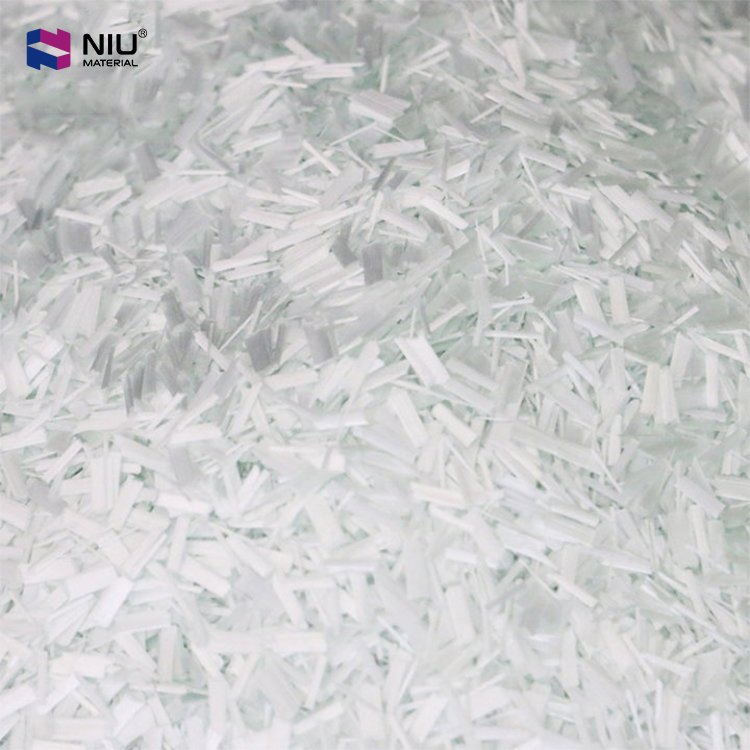
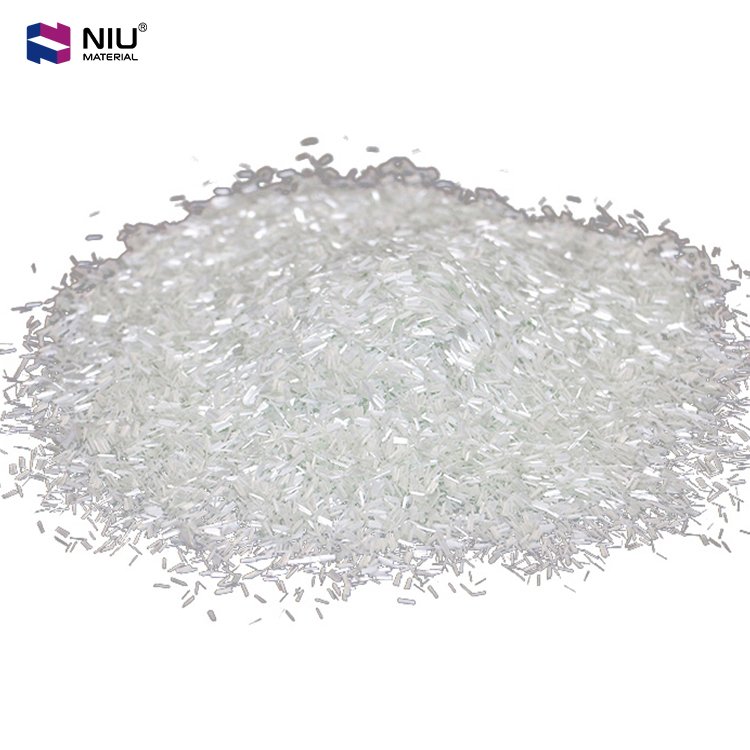
Thermoplastic Fiberglass Chopped Strands are E-glass filaments cut into short, uniform lengths — typically 3 mm, 4.5 mm, or 6 mm — and coated with a silane-based sizing formulated for thermoplastic matrices.
The sizing is the deciding factor: it couples the inorganic glass surface to the organic resin so that stress transfers from polymer to fiber under load. Strands designed for PP will not wet out correctly in PA, which is why the product is graded by target resin before it reaches a compounder.
Why Molders Choose Them over Unfilled and Mineral-Filled Resins
Compared with unfilled polypropylene or nylon, a compound reinforced with Thermoplastic Fiberglass Chopped Strands shows markedly higher tensile strength and flexural modulus, a higher heat deflection temperature, better creep resistance, and improved dimensional stability.
Molded parts resist sagging under load at elevated temperature, hold tighter tolerances, and warp less than many mineral-filled alternatives. The gains are predictable: at a typical 30% glass content, mechanical performance improves by two to three times or more against the base resin.
Where They Are Used in Automotive
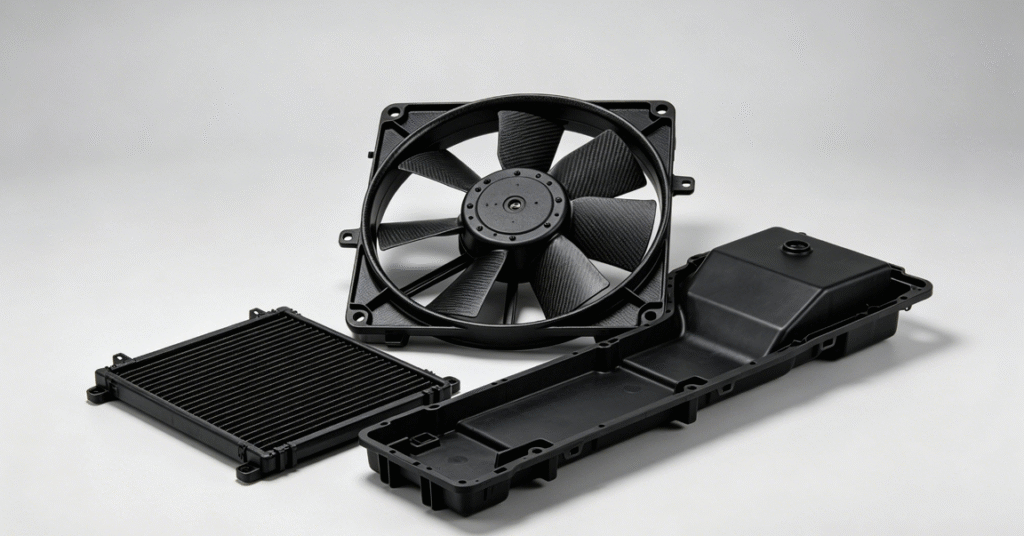
The automotive sector is the largest consumer of glass-reinforced thermoplastics, and Thermoplastic Fiberglass Chopped Strands sit at the center of that supply chain. Chopped-strand-reinforced PP and PA6 are specified for engine cooling fans and radiator shrouds, battery trays, engine covers, and many under-the-hood components where continuous heat and vibration would soften unreinforced resin.
PA66 compounds reinforced with chopped strands are the standard choice for air intake manifolds, which must survive continuous exposure at temperatures above 130 °C. In long-glass-fiber form, the same raw material appears in front-end modules, seat structures, and interior door panels, where impact performance matters as much as stiffness.
Appliances and Power Tools
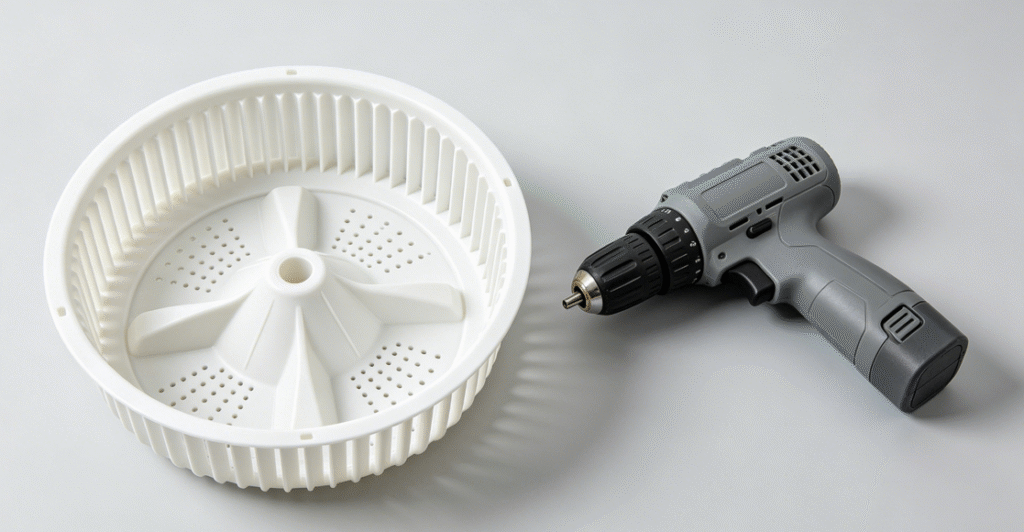
In white goods, glass-fiber-reinforced PP built fromThermoplastic Fiberglass Chopped Strands is the workhorse behind washing machine inner tubs, pulsators, and pump housings, which must resist detergent chemistry, hot water, and cyclic mechanical load through a decade of daily use. Dishwasher spray arms and filtration structures use the same approach.
Power tool housings — drills, impact drivers, circular saw guards — rely on chopped-strand-reinforced compounds for drop resistance and rigidity at a lower cost than PA6-GF, while motor brackets and gearbox casings benefit from the material’s creep resistance under constant torque.
Electrical, Electronic, and Industrial Components
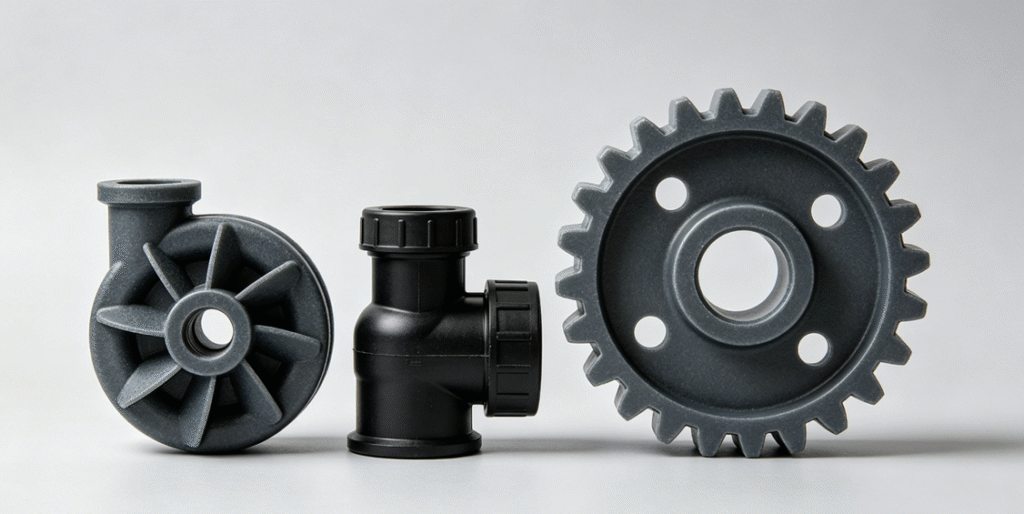
Where insulating, flame-retardant, and dimensionally stable materials are required, Thermoplastic Fiberglass Chopped Strands reinforced PA6 and PBT dominate. Relay housings, connectors, coil bobbins, circuit-breaker components, and switch housings are molded from these compounds because they hold their shape through soldering heat and continuous electrical load. In industrial equipment, the same materials appear in pump impellers, valve bodies, and gears, where stiffness, wear resistance, and dimensional precision determine service life.
What to Verify When Sourcing
Not allThermoplastic Fiberglass Chopped Strandsare interchangeable. Buyers should confirm that the sizing chemistry is matched to the target resin, that fiber length and filament diameter (commonly 10–13 µm) stay consistent within each lot, and that the strands disperse cleanly without pilling or fluffing during compounding.
Moisture control matters too: strand packages must remain dry from factory to hopper, since moisture degrades glass–resin coupling and the final mechanical properties. A reliable supplier provides datasheets, lot traceability, and compounding trial support before volume orders.
In Conclusion
Thermoplastic Fiberglass Chopped Strands offer a proven, cost-effective route from commodity resin to engineering-grade parts. They raise stiffness, heat resistance, and dimensional stability; they support metal replacement across automotive, appliance, power tool, and electrical applications; and they process on standard injection molding lines.
The material choice is only half the story — the other half is a supplier who understands sizing chemistry, quality control, and application support. If you are compounding PP, PA, or PBT, Thermoplastic Fiberglass Chopped Strands deserve a place in your next material evaluation. Contact our team for samples, datasheets, and trial support.
Do you want to know the technical parameters and TDS of products?
You can leave the specifications and contact information you need~ Our technicians will immediately organize the exclusive information for you and send it to your email!
Interested in this specification?
You can leave your contact information here, and we will send you detailed specifications and application cases to make your purchase clearer~
Contact us via email
You can leave a message about the fiberglass and other composite materials you are interested in/looking for.
We will send you a clear quotation (including product price + shipping cost) within 12 hours.
How can we help you?
You can leave a message about the fiberglass materials you are interested in/looking for.
We will send you a clear quotation (including product price + shipping cost) within 12 hours.