Add a header to begin generating the table of contents
Introduce
Every FRP laminate has two surfaces that tell a story. The visible side must look smooth enough for paint, gel coat, or direct sale; the hidden side must resist whatever chemical, water, or weather touches it for years.
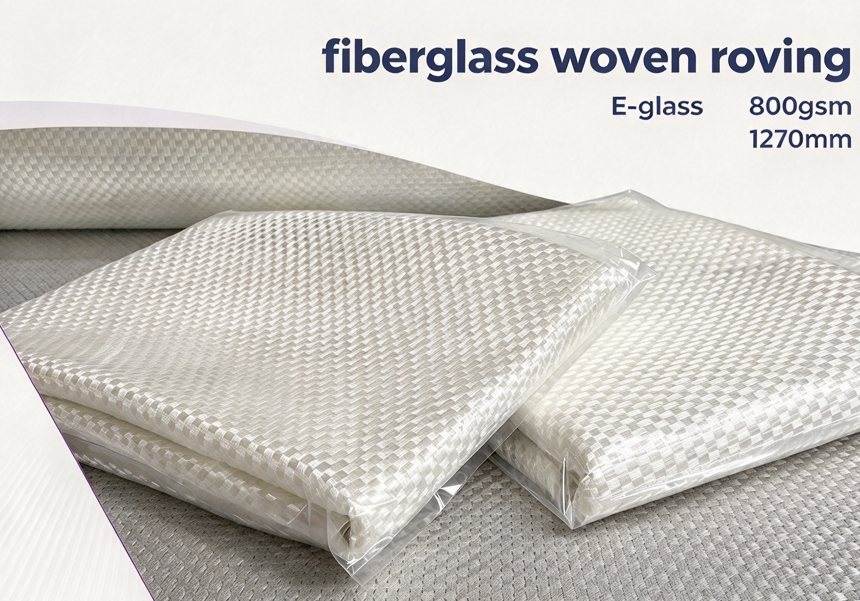
Standard chopped strand and woven roving build the thickness, but they leave a coarse, fibery face that either needs hours of sanding or lets corrosion begin.
Fiberglass Polyester Mat solves both problems at once: a thin non-woven sheet that sits on the surface, delivers a clean finish, and forms the barrier that protects the laminate underneath.
What Is a Fiberglass Polyester Mat?
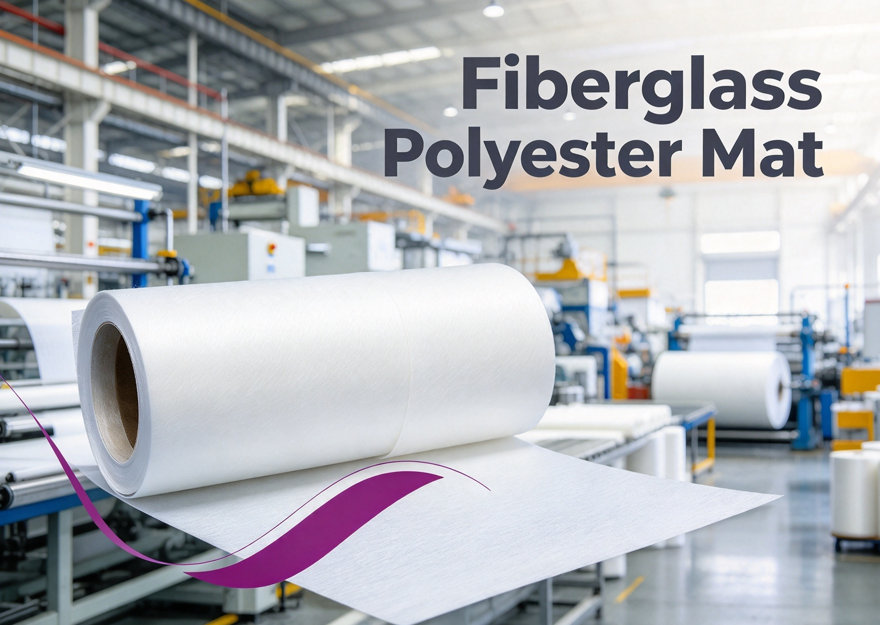
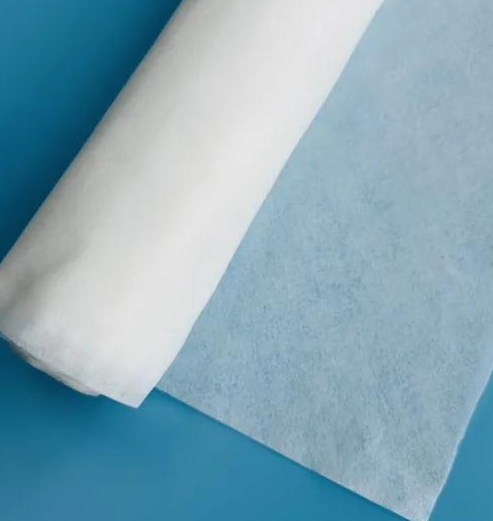
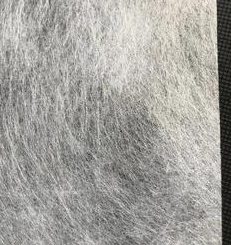
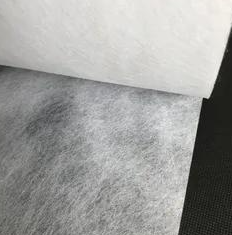
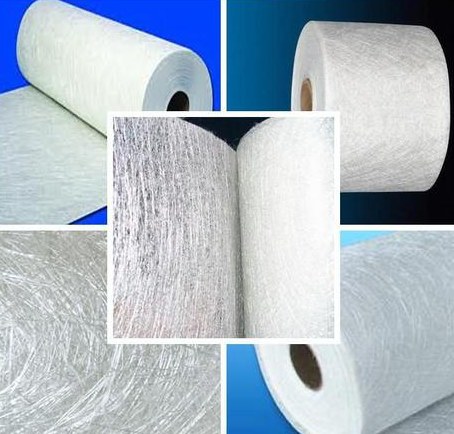
A Fiberglass Polyester Mat is a non-woven web of fine polyester fibers — typically 40 to 100 g/m² — designed to be laid as the surface layer of an FRP part.
Unlike structural mats that add thickness, this mat is engineered to be thin, conformable, and fully saturated by resin within seconds. It is compatible with unsaturated polyester, vinyl ester, and epoxy resins, and it works in hand lay-up, filament winding, RTM, and pultrusion.
Because it is so light, aFiberglass Polyester Mat adds almost no weight while changing the surface and barrier behavior of the whole laminate.
The Finish It Delivers: A Surface You Can Print On
The first job ofFiberglass Polyester Mat is appearance. A laminate built from coarse glass reinforcement shows fiber print-through, pinholes, and resin-rich valleys that ruin paint and gel coat quality.
Placed as the outer layer — or just behind the gel coat — theFiberglass Polyester Mat holds resin on the surface, closes the coarse texture, and creates the smooth, uniform face that Class-A finishes require.
Molders use it to reduce fairing, sanding, and paint prep, which means the same clean surface a custom jar designer wants for a label is achieved here without extra labor.
The Barrier It Builds: Corrosion Starts at the Surface
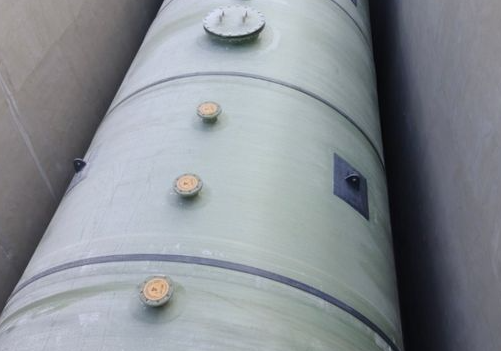
The second job is protection. In chemical-duty FRP, the inner surface decides the service life, and Fiberglass Polyester Mat is specified there as the corrosion barrier of tanks, pipes, and vessels. Because the polyester veil is resin-rich and impermeable to the glass texture underneath, it blocks acids, alkalis, and solvents from reaching the structural laminate.
Filament-wound storage tanks and anti-corrosion pipes commonly build their inner liner from aFiberglass Polyester Mat layer before structural roving is wound over it — the same principle found in standards for corrosion-resistant GRP pipework.
Marine and Transport: Behind the Gel Coat
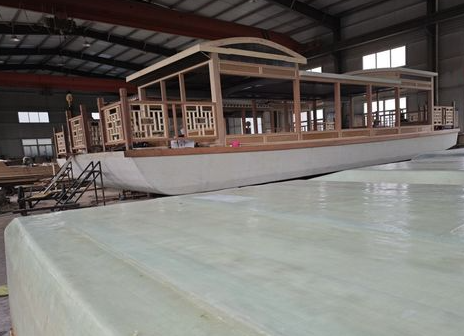
Boat hulls and transport panels judge a material by how it looks after years of water, salt, and sun.Fiberglass Polyester Matsits directly behind the gel coat in hulls, decks, and yacht structures, preventing fiber print-through from reaching the visible surface and reducing blister risk in wet service.
The same logic applies to automotive exteriors, RV sidewalls, and train interior panels, where a Fiberglass Polyester Mat layer improves paint quality and eliminates the fairing compounds that slow production. What the flat belly is to a custom jar, this thin mat is to a hull: a reliable surface that branding and finishing can depend on.
Which Processes Accept It?
Fiberglass Polyester Mat is thin enough to follow curves and corners, which is why it appears in nearly every open and closed molding route.
In hand lay-up, it is the final surface layer that closes the laminate; in filament winding, it forms the inner liner before structural layers go on; in RTM and pultrusion, it is combined with chopped strand mat so that the profile or panel leaves the die with a finished face.
The polyester fibers of aFiberglass Polyester Matwet out in polyester and vinyl ester systems especially fast, keeping cycle times short without sacrificing surface quality.
What to Check Before You Buy
Sourcing Fiberglass Polyester Mat comes down to a few numbers and one compatibility question. Confirm the areal weight (40, 60, 70, or 100 g/m²) against your surface or liner requirement, check roll width against your lay-up pattern, and verify that the veil is 100% polyester where chemical resistance matters.
Ask the supplier how theFiberglass Polyester Mat behaves with your resin system — wet-out speed, surface porosity, and adhesion to the layer behind it all affect the finished part. A supplier with trial rolls and consistent batch quality makes the choice as simple as the product itself.
In Conclusion
Fiberglass Polyester Mat gives FRP what gel coat alone cannot: a resin-rich barrier on the chemical side and a smooth, printable surface on the visible side, all in one thin, low-cost layer.
Whether you build chemical tanks, anti-corrosion pipes, boat hulls, or transport panels, adding a Fiberglass Polyester Mat to the surface turns a rough laminate into a finished product — and prevents the corrosion that starts at day one. Contact our team for samples, datasheets, and grade recommendations.
Do you want to know the technical parameters and TDS of products?
You can leave the specifications and contact information you need~ Our technicians will immediately organize the exclusive information for you and send it to your email!
Interested in this specification?
You can leave your contact information here, and we will send you detailed specifications and application cases to make your purchase clearer~
Contact us via email
You can leave a message about the fiberglass and other composite materials you are interested in/looking for.
We will send you a clear quotation (including product price + shipping cost) within 12 hours.
How can we help you?
You can leave a message about the fiberglass materials you are interested in/looking for.
We will send you a clear quotation (including product price + shipping cost) within 12 hours.