What Is the Best Reinforcement Fabric for Modern Composite Projects?
Table of Contents
Add a header to begin generating the table of contents
Introduce
Choosing the correct reinforcement fabric for composite manufacturing and structural repair matters far more than many project engineers realize. A reinforcement fabric is not merely a roll of black woven material. It delivers tensile strength, anti‑corrosion performance, surface aesthetics, and directly shapes the final quality, service life and market competitiveness of finished composite parts.
Today the market offers many competing reinforcement materials, and no single material is perfect for every working condition. Still, when balancing high tensile strength, lightweight property, chemical resistance and molding adaptability, carbon fiber fabric has grown into one of the most trusted reinforcement materials across multiple industrial sectors.
From building structural retrofitting, automotive lightweight parts, aerospace secondary structures to wind‑energy component production, unidirectional carbon fiber cloth, twill carbon fiber fabric and other variants are widely adopted by factories and engineering teams pursuing reliable high‑performance solutions. For wholesalers, component manufacturers and construction contractors, picking a trustworthy material supplier is another critical business decision. Reliable suppliers deliver stable batch quality, flexible customization options and consistent production capacity to satisfy diversified market demands.
So what is the best reinforcement fabric for your composite project? The answer changes according to application scenarios, but carbon fiber‑based reinforcement remains one of the most versatile and high‑performance solutions available today.
What Makes High‑Performance Reinforcement Fabric Stand Out
A qualified high‑performance reinforcement fabric does more than simply fill resin matrix. It should improve mechanical performance, resist harsh working environments, simplify manufacturing processes, and bring tangible benefits for both factories and end‑product clients.
When sourcing reinforcement materials, composite enterprises usually evaluate several key dimensions: mechanical strength, resin compatibility, corrosion resistance, molding flexibility and comprehensive cost‑efficiency. Ideal fabric should strengthen components and also help finished products gain competitive advantages on the market.
Mechanical Strength And Light‑Weight Advantage
Strength‑to‑weight ratio is the top priority for reinforcement fabrics. Since fabric works embedded inside resin matrix for long‑term load bearing, the material must maintain stable mechanical indexes and will not add excessive dead weight to finished parts.
High‑quality carbon fiber woven fabric features outstanding strength‑to‑weight performance. It brings remarkable lifting in rigidity without increasing structural burden, making it an irreplaceable option for lightweight upgrade projects.
Resin Compatibility And Wet‑Out Performance
Excellent reinforcement fabric must match well with resin systems such as epoxy resin. Good sizing treatment ensures full resin wet‑out, reduces internal voids, and guarantees reliable bonding between fiber and resin matrix.
Poor compatibility will generate tiny void layers inside composite parts, which become hidden defects that cause early cracking and delamination.
Corrosion Resistance And Long‑Term Aging Resistance
Many composite components and reinforced structures serve outdoors, exposed to humidity, salt spray and chemical erosion. Premium fabric shall resist chemical degradation and keep stable performance over decades.
Drapability And Processing Adaptability
Great reinforcement fabric can adapt to complex curved surfaces, irregular profiles and different molding crafts including hand lay‑up, vacuum infusion and filament winding. Good drapability shortens operating time and lowers technical requirements for workers.
Comparison of Common Industrial Reinforcement Fabrics
Glass Fiber Fabric
Glass fiber fabric is cost‑effective and widely used in general‑grade composite products. It delivers decent tensile strength, but cannot satisfy ultra‑high‑strength lightweight requirements for advanced components. Its weight will rise significantly if you pursue higher rigidity.
Basalt Fiber Fabric
Basalt fiber fabric boasts good temperature resistance and anti‑corrosion capacity. Its tensile performance sits between glass fiber and carbon fiber, and it is suitable for medium‑load projects where cost control ranks high.
Aramid Fiber Fabric
Aramid fiber fabric excels at impact‑resistance and bullet‑proof scenarios. However, its modulus is relatively low, and prices stay high for large‑area structural reinforcement.
Carbon Fiber Fabric
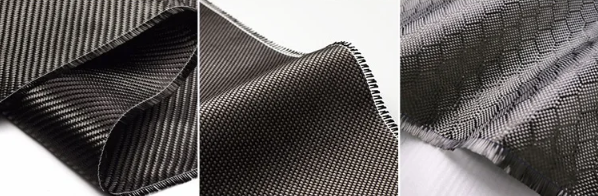
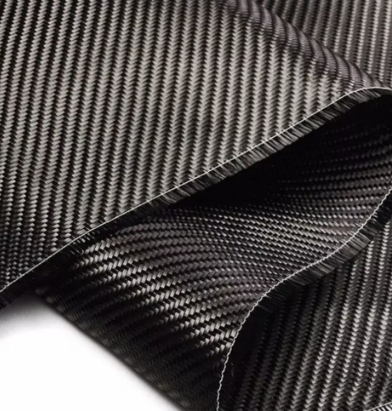
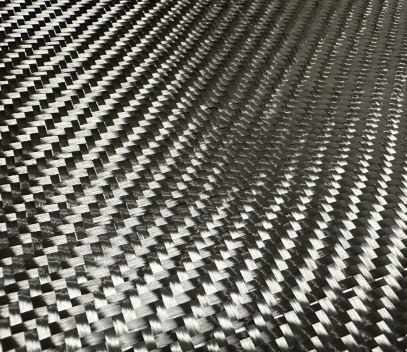
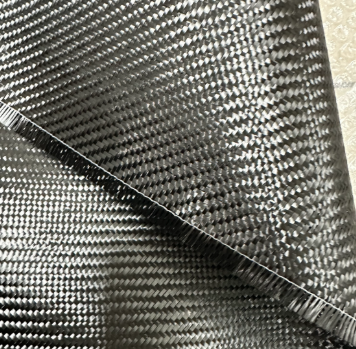
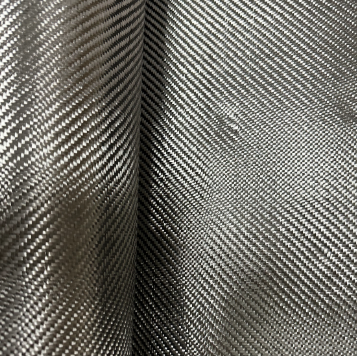
Carbon fiber fabric achieves ultra‑high tensile modulus and low density simultaneously. Compared with metal reinforcement solutions, it adds nearly zero extra dead load to structures. Unidirectional carbon fiber cloth concentrates strength along the main stress direction for structural retrofitting. Twill carbon fiber fabric balances mechanical property and gorgeous surface texture for visible aesthetic composite parts.
For building reinforcement, automotive lightweight modification, aerospace auxiliary components and wind‑power moulded parts, carbon fiber fabric opens performance space that traditional textile reinforcement cannot reach.
Why Carbon Fiber Fabric Ranks Among Top Reinforcement Choices
Outstanding Strength‑To‑Weight Ratio For Lightweight Upgrade
When you need higher rigidity without heavy mass, carbon fiber woven fabric delivers unbeatable advantages. Its tensile strength is many times higher than ordinary steel, while its density is only a fraction of metal materials.
In automobile new‑energy projects, replacing metal parts with carbon‑fiber‑reinforced composite cuts vehicle weight, improves cruising mileage and reduces energy consumption. For bridge and building retrofitting, wrapping structural members with unidirectional carbon fiber cloth improves bearing capacity without enlarging original cross‑section size.
Excellent Chemical Stability And Anti‑Corrosion Performance
Unlike steel plates that rust under salt‑spray and humid environment, qualified carbon fiber fabric does not corrode. It resists acid, alkali and salt erosion, perfectly adapting to coastal infrastructure, chemical workshop equipment and long‑term outdoor working conditions.
This characteristic greatly lowers later‑stage maintenance workload. Reinforcement layers will not lose efficacy caused by rust expansion damage.
Diversified Weave Options Fit Multiple Application Goals
Unidirectional carbon fiber cloth arranges most carbon tows along one single direction, focusing tensile capacity for structural strengthening work such as beam, column and bridge pier reinforcement.
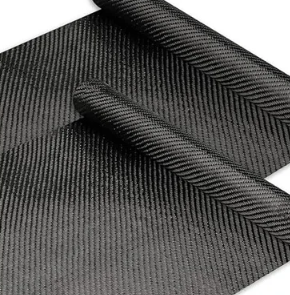
Twill carbon fiber fabricowns balanced bi‑directional performance plus classic diagonal weaving texture. It is widely applied to exterior automobile parts, racing‑car components, and consumer‑grade composite goods where both mechanical index and visual appearance matter.
Plain‑weave carbon fiber fabric features stable dimensional performance, suitable for flat laminates and mould‑press industrial parts.
Flexible Processing For Complex Geometric Shapes
High‑quality carbon fiber fabric has good drapability. Operators can cut and lay it onto curved, angular and irregular surfaces. Whether adopting hand lay‑up process for small‑batch customized pieces or vacuum infusion for mass production, carbon fiber fabric can cooperate with mainstream composite manufacturing workflows.
How To Pick Suitable Carbon Fiber Fabric For Your Project
Selecting carbon fiber fabric is not simply picking the thickest or the cheapest roll. It must match project load requirement, working environment, molding craft and end‑product positioning. Below are several critical evaluation dimensions.
Confirm Project Load And Main Stress Direction
For structural reinforcement projects (beams, slabs, bridge piers) bearing unidirectional tension, prioritize unidirectional carbon fiber cloth. It concentrates fiber along stress direction to maximize reinforcement efficiency.
For components suffering multi‑directional force and requiring beautiful surface effect, choose twill carbon fiber fabric or plain‑weave carbon fiber fabric.
Check Areal Weight, Tensile Grade And Sizing Compatibility
Areal weight (g/m²) directly decides reinforcement thickness. Common specifications include 200g, 300g and 400g carbon fiber fabric. Higher‑gram‑weight fabric brings stronger reinforcement but raises difficulty for resin full wet‑out.
You also need to verify sizing agent type, making sure the fabric is compatible with your epoxy resin or other resin matrix. Poor sizing matching will result in low inter‑laminar shear strength of finished CFRP parts.
Evaluate Working Environment Requirements
For coastal, chemical plant projects with heavy salt‑spray and chemical erosion, emphasize fabric tensile retention rate under corrosive environment. Avoid low‑grade products with unstable carbon filament quality.
For indoor aesthetic composite parts, pay attention to surface weaving uniformity ofcarbon fiber woven fabric, reducing defects such as broken filaments and fuzz.
Wholesale Carbon Fiber Fabric For Manufacturers, Contractors And Distributors
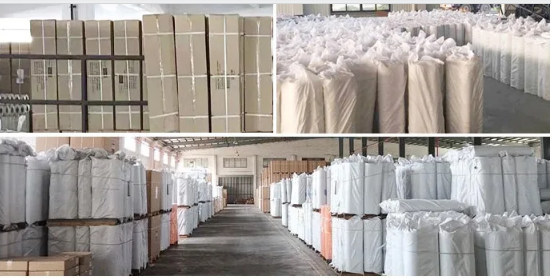
For composite manufacturers, engineering contractors and material distributors, sourcing carbon fiber fabric in bulk is more than comparing unit prices. Stable production capacity, customization service, complete quality certification and professional logistics solutions will directly influence project progress and business profit.
Stable Production Capacity & Flexible MOQ Setting
Standard‑spec carbon fiber fabric bulk orders are generally supplied by roll or pallet, suiting distributors’ regular stock replenishment and mass‑production enterprises. When projects need special areal weight, customized width or special sizing formula, reliable suppliers can provide custom weaving and surface‑treatment service with flexible minimum‑order quantity.
This allows buyers to obtain targeted material solutions without overstock pressure.
Carbon fiber fabric is far more than a fashionable high‑tech black woven material. It is a high‑performance reinforcement core material solving real‑world pain‑points across building retrofitting, automobile lightweight, aerospace auxiliary parts and new‑energy wind‑power industries. Different weave styles including unidirectional carbon fiber cloth, twill carbon fiber fabric and carbon fiber woven fabric serve distinct loading requirements and appearance goals.
Whether you need mass‑volume standard carbon‑fiber fabric or custom‑formulated special‑specification products for unique composite projects, a professional carbon‑fiber material manufacturer can deliver professional technical consultation and stable production capacity support.
Do you want to know the technical parameters and TDS of products?
You can leave the specifications and contact information you need~ Our technicians will immediately organize the exclusive information for you and send it to your email!
Interested in this specification?
You can leave your contact information here, and we will send you detailed specifications and application cases to make your purchase clearer~
Contact us via email
You can leave a message about the fiberglass and other composite materials you are interested in/looking for.
We will send you a clear quotation (including product price + shipping cost) within 12 hours.
How can we help you?
You can leave a message about the fiberglass materials you are interested in/looking for.
We will send you a clear quotation (including product price + shipping cost) within 12 hours.