
- fiberglassnicole@gmail.com
- +86-13933702587
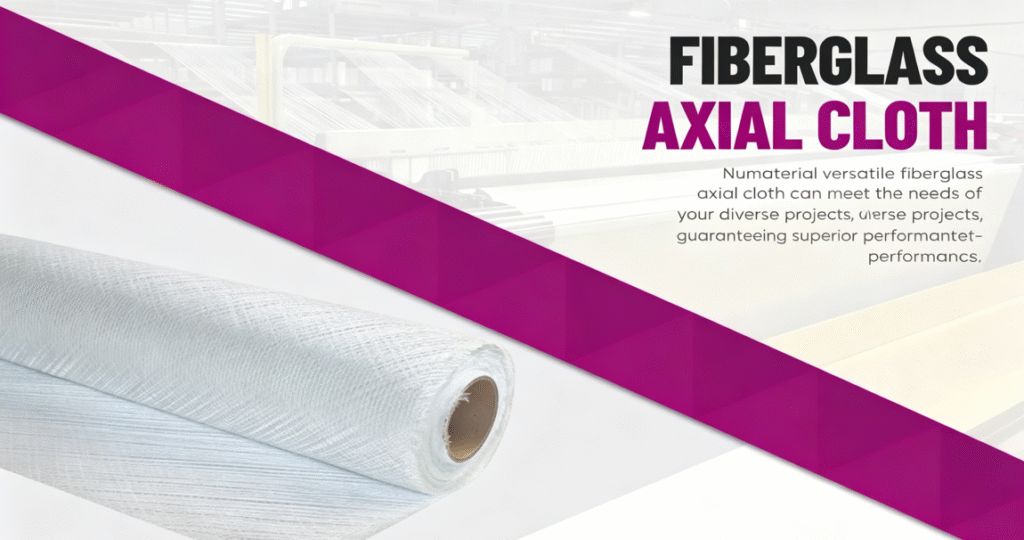
For FRP manufacturers and engineering contractors, insufficient structural strength, excessive product weight and interlayer delamination have long been the most persistent pain points in production and construction. Many teams only adjust resin formulas or optimize curing processes, yet they ignore the most decisive factor that determines the mechanical performance of finished parts: the orientation and arrangement of reinforcing fibers.
Fiberglass axial fabric, a warp-knitted reinforcement material with fibers arranged along specific stress directions, has become the core material for high-performance FRP products. Unlike ordinary woven fabrics where fibers crisscross and bend, axial fabric arranges glass fiber rovings parallel to the load-bearing direction, maximizing the tensile strength of each fiber. From wind turbine blades to ship hulls, from pultruded profiles to large storage tanks, it delivers performance that traditional plain weave fabrics cannot match.
This guide will explain the core advantages of axial fiberglass reinforcement, compare it with other common reinforcement materials, and share practical selection and sourcing tips to help you find the most suitable reinforcement solution for your projects.
A high-performance FRP reinforcement fabric does more than just fill the resin matrix. It should accurately transfer load, resist harsh working conditions, improve molding efficiency, and create tangible value for both production and end use.
When selecting reinforcement materials, FRP enterprises usually focus on four core dimensions: strength-to-weight ratio, resin wet-out efficiency, directional reinforcement accuracy, and molding adaptability. The ideal reinforcement can not only improve the mechanical properties of finished products, but also help enterprises reduce production costs and shorten production cycles.
The core value of fiber reinforcement lies in improving rigidity without increasing excessive weight. High-quality reinforcement should have high tensile strength and modulus while maintaining a low density to avoid increasing the dead load of the structure.
Excellent reinforcement must be highly compatible with resin systems such as unsaturated polyester, vinyl ester and epoxy resin. Good sizing treatment ensures fast and sufficient resin penetration, reduces internal voids, and achieves reliable bonding between fiber and resin matrix.
Most FRP structures bear force in specific directions. High-efficiency reinforcement should concentrate fiber strength on the main stress path, instead of wasting fiber consumption on non-load-bearing directions.
Warp-knitted fiberglass axial fabric precisely meets this demand. It fixes oriented fiber layers through stitching, so that the fiber strength is fully released along the stress direction, and the reinforcement efficiency per unit weight is much higher than that of ordinary woven fabrics.
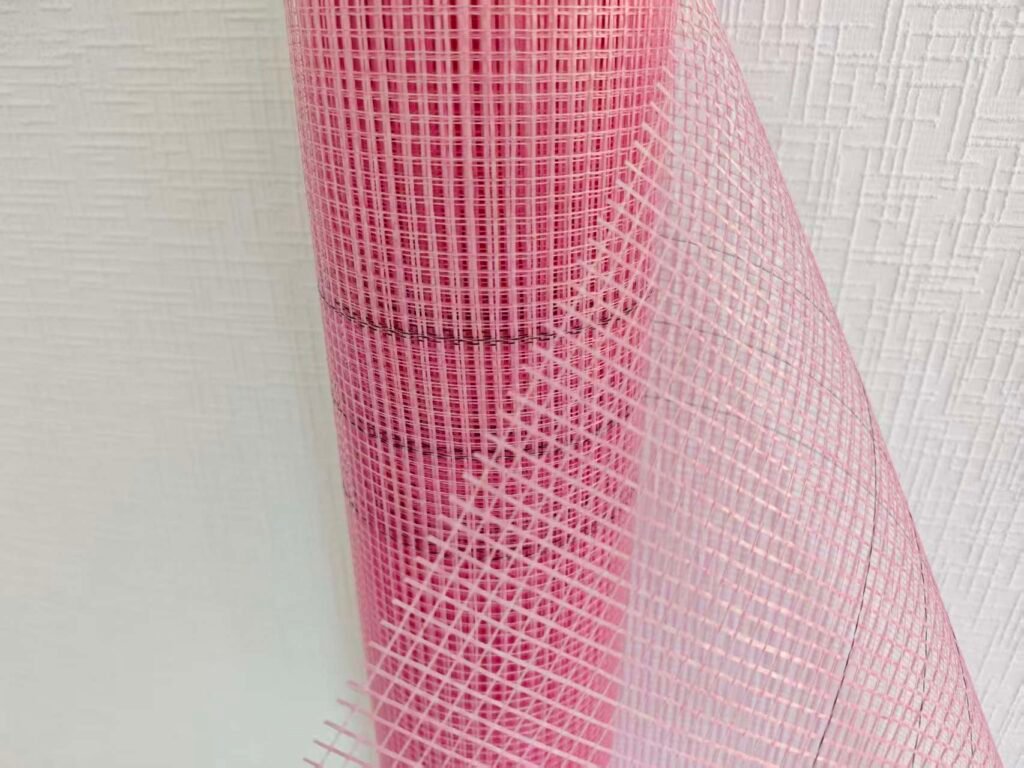
Plain weave fiberglass cloth is the most common traditional reinforcement material. It is low in cost and easy to stock, but fibers are bent during weaving, which cannot fully exert the tensile strength of glass fibers, and the directional reinforcement effect is limited. It is suitable for ordinary FRP products with low performance requirements.
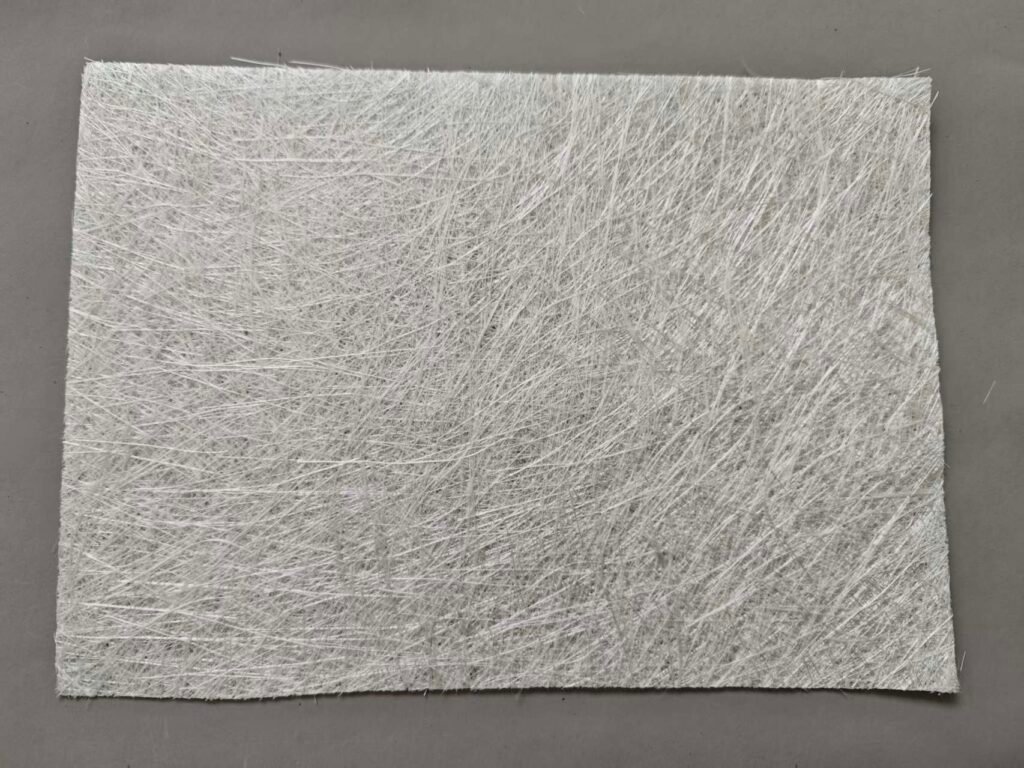
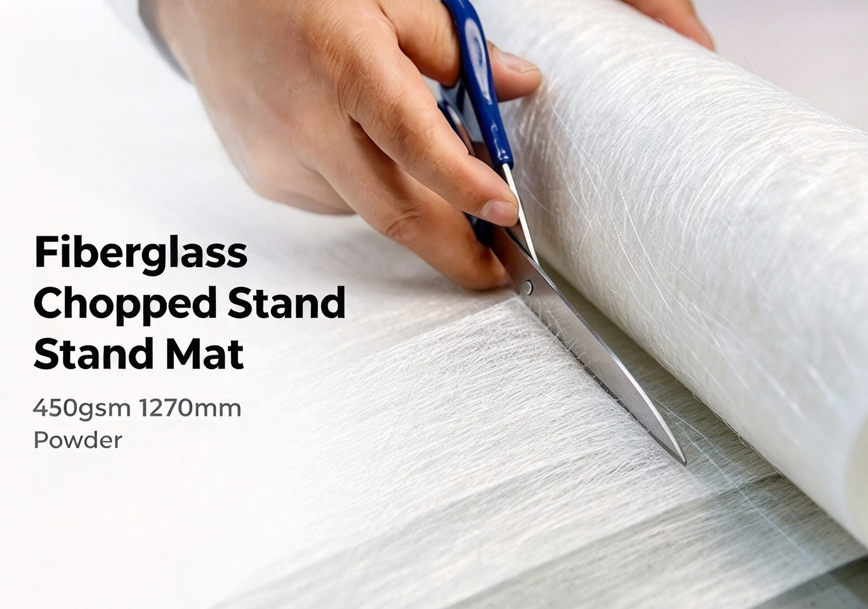
Chopped strand mat has good drapability and low price, and is suitable for hand lay-up molding of simple-shaped products. However, its strength is low, the resin content is high, and the product weight is large, so it cannot meet the needs of high-load structural parts.
Unidirectional carbon fiber fabric has excellent directional reinforcement effect and ultra-high strength-to-weight ratio, but the material cost is very high, which is only suitable for high-end fields such as aerospace and high-end sports equipment, and is difficult to popularize in large-scale industrial projects.
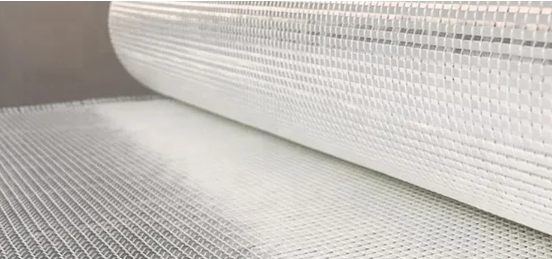
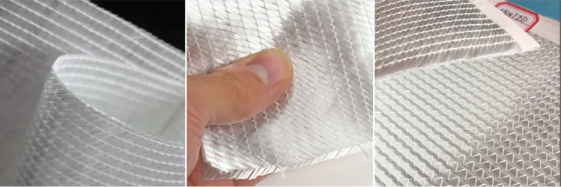
Fiberglass axial fabrics are available in unidirectional, bidirectional, and multidirectional specifications. The fibers are arranged parallel along a specific direction and secured with polyester stitching. The fibers are not crimped in the load-bearing direction, resulting in extremely high strength utilization of the fiberglass.
Unidirectional fiberglass axial fabrics concentrate most of the fiber weight in the 0° principal stress direction, making them suitable for beams, trusses, and other components primarily subjected to unidirectional tensile forces. Multidirectional fiberglass fabrics are composed of fiber layers at 0°, 90°, and ±45° angles, meeting the stress requirements of complex structures and are widely used in wind power, shipbuilding, and other fields.
Compared to carbon fiber materials, it is more cost-effective while maintaining excellent mechanical properties; compared to ordinary woven fabrics, it has significantly higher reinforcement efficiency and can achieve a lighter weight while meeting the same strength requirements.
The greatest advantage of axially oriented fabrics lies in their straight, parallel fibers, free from crimping. When the structure is under stress, each fiber can bear the load synchronously, increasing the strength utilization rate of glass fiber by more than 30% compared to ordinary plain weave fabrics.
E-type glass fiber axially oriented fabrics use high-quality alkali-free glass fiber rovings as raw materials, possessing stable and reliable tensile modulus and strength. For FRP products with clearly defined principal stress directions, using axial reinforcement materials can reduce the total amount of reinforcement material while meeting strength requirements, thereby effectively reducing product weight and material costs.
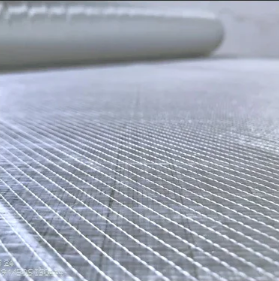
Traditional woven fabrics are prone to interlayer delamination under long-term alternating loads. The warp-knitted structure of axial fabric connects each fiber layer as a whole through stitching yarns, which significantly improves the interlayer shear strength and reduces the risk of delamination and cracking of products under long-term load.
This feature makes FRP reinforcement axial fabric widely used in wind turbine blades, ship hulls and other components that bear long-term alternating stress. It can maintain stable mechanical properties after millions of stress cycles, and effectively extend the service life of finished products.
The open structure of axial fabric allows resin to penetrate quickly and evenly. In vacuum infusion, RTM and other molding processes, the resin flow speed is faster and the impregnation is more sufficient, which shortens the molding cycle and reduces the probability of dry fiber defects.
For large-scale projects such as wind power and shipbuilding, this performance directly improves production efficiency, reduces labor time per unit product, and helps enterprises control production costs while ensuring quality.
There are rich specifications of axial fiberglass fabrics to meet the needs of different working conditions.
Wind blade fiberglass axial fabric is optimized for fatigue resistance and high modulus, which is suitable for main beams, auxiliary beams and shell reinforcement of large wind blades; marine hull fiberglass axial fabric has excellent corrosion resistance and impact resistance, and can adapt to the harsh environment of seawater erosion for a long time.
In addition to vacuum infusion, it is also compatible with hand lay-up, pultrusion, filament winding and other processes, and can be used in combination with chopped strand mats, surface mats and other materials to build a multi-layer reinforcement structure.

Choosing fiberglass axial fabric is not about selecting the thickest or highest-strength specification. It needs to match the structural stress characteristics, molding process and service environment of the product. The following four dimensions can help you make the most appropriate choice.
For components that mainly bear unidirectional load, such as pultruded profiles and beam structures, unidirectional fiberglass axial fabric is preferred to concentrate fiber strength on the main stress direction and maximize cost performance.
For flat structures bearing bidirectional force, biaxial fiberglass fabric with 0°/90° arrangement can be selected; for complex stress components such as hulls and wind turbine shells, triaxial or quadraxial fabrics with ±45° layers should be selected to resist shear force and multi-directional load at the same time.
The areal weight (g/m²) of axial fabric directly determines the thickness of the reinforcement layer. Common specifications range from 300g to 2000g per square meter. Higher gram weight brings higher strength, but also increases the difficulty of resin wet-out and the weight of finished products.
The appropriate gram weight should be selected according to the structural design strength requirements and molding process conditions. For large-thickness reinforcement, multi-layer laying is recommended instead of choosing an overly thick single-layer fabric, so as to ensure sufficient resin penetration and avoid internal defects.
Different resin systems have different requirements for fiber sizing. Before batch procurement, it is necessary to confirm that the sizing agent of the axial fabric matches the resin used (unsaturated polyester, vinyl ester, epoxy resin, etc.) to avoid problems such as poor interface bonding and delamination of finished products.
High-quality suppliers can provide targeted sizing formulas for specific resin systems to ensure optimal interface bonding strength between fiber and resin.
For coastal and chemical projects with high humidity and salt spray corrosion, priority should be given to products with excellent corrosion resistance and stable fiber properties; for long-term outdoor projects, attention should be paid to the UV resistance and aging resistance of the fabric.
For load-bearing structural parts with high safety requirements, products with complete test reports such as tensile strength, fatigue performance and interlaminar shear strength should be selected to ensure that the material performance meets the design indicators.
Fiberglass axial fabric is far more than an upgraded version of ordinary fiberglass cloth — it is a high-performance reinforcement material that can truly improve the mechanical efficiency of FRP structures and reduce comprehensive costs. From unidirectional to multiaxial specifications, from wind energy to marine applications, each grade of product is designed for specific stress scenarios and process requirements.
For FRP manufacturers, engineering contractors and material distributors, choosing the right grade of axial fiberglass fabric and cooperating with a reliable manufacturer can help you reduce product weight, improve production efficiency, and deliver higher-quality FRP solutions to customers.
Whether you need mass-standard E-glass fiberglass axial fabric or custom-formulated special specifications for unique projects, a professional fiberglass product manufacturer can provide professional technical consultation and stable production capacity support to help you optimize your reinforcement scheme and create higher value for your projects.

If you have any questions
Please contact us for free consultation and product quotation

You can leave the specifications and contact information you need~ Our technicians will immediately organize the exclusive information for you and send it to your email!
You can leave your contact information here, and we will send you detailed specifications and application cases to make your purchase clearer~