Why Your Fiberglass Needle Mat Has Tiny Spots (And When It’s Actually Normal)
Table of Contents
Add a header to begin generating the table of contents
A Common Question About Appearance Spots in Fiberglass Needle Mats
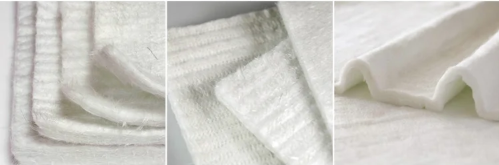
A buyer recently received a batch of custom fiberglass needle mat. The thickness, width, density and flame-retardant index all met the specification. Then, while inspecting the rolls under bright workshop lights, the buyer noticed a few tiny fiber nodes and subtle white spots inside the felt body. The question came quickly: “Why does fiberglass insulation have these spots? Foam insulation looks perfectly uniform. Is this a quality defect?”
It is a fair question. For industrial insulation, sound absorption and filtration projects, a needle mat is not merely a roll of fiber felt. It determines thermal efficiency, fire safety, equipment service life and total project cost. When buyers source industrial fiberglass needle linerin bulk, every visible detail can feel important.
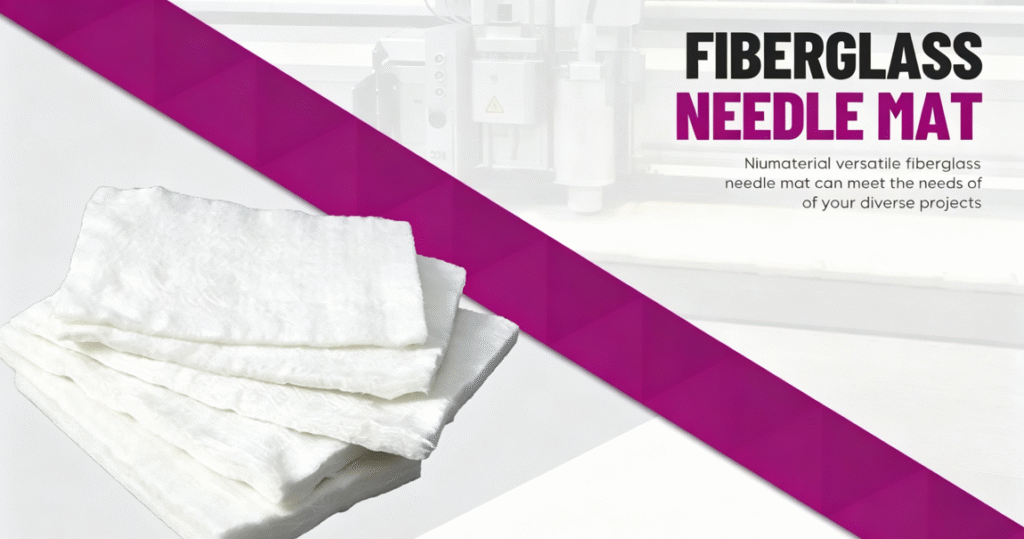
The simple answer is that fiberglass needle mats and rigid insulation materials are produced through completely different processes. Fiberglass needle felt is formed by needle-punching thousands of glass fiber filaments into a three-dimensional structure. During opening, carding, lapping and needle-punching, a tiny number of fiber knots or minor density differences can occasionally remain in the final product. Other insulation materials have their own defects too — they just appear as delamination, powder dropping, shrinkage or brittleness, not visible surface spots.
A tiny internal fiber node does not automatically mean a needle mat is unqualified. Its size, quantity, position, influence on performance, and project application all matter. This guide explains what buyers should know before judging a shipment or placing the next order.
Why Do Fiberglass Needle Mats Have Visible Fiber Nodes?
Needle-Punched Structure Comes From Discontinuous Fiber Lapping
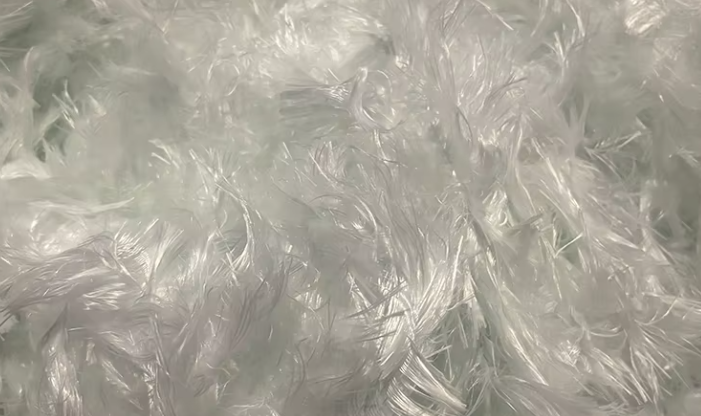
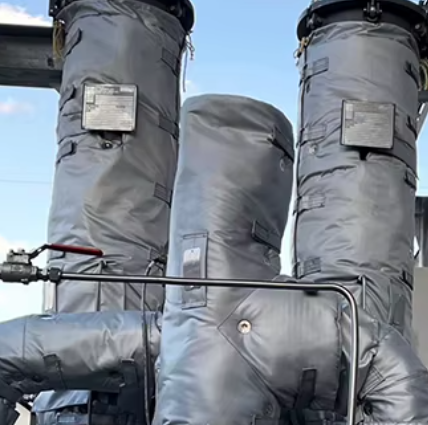
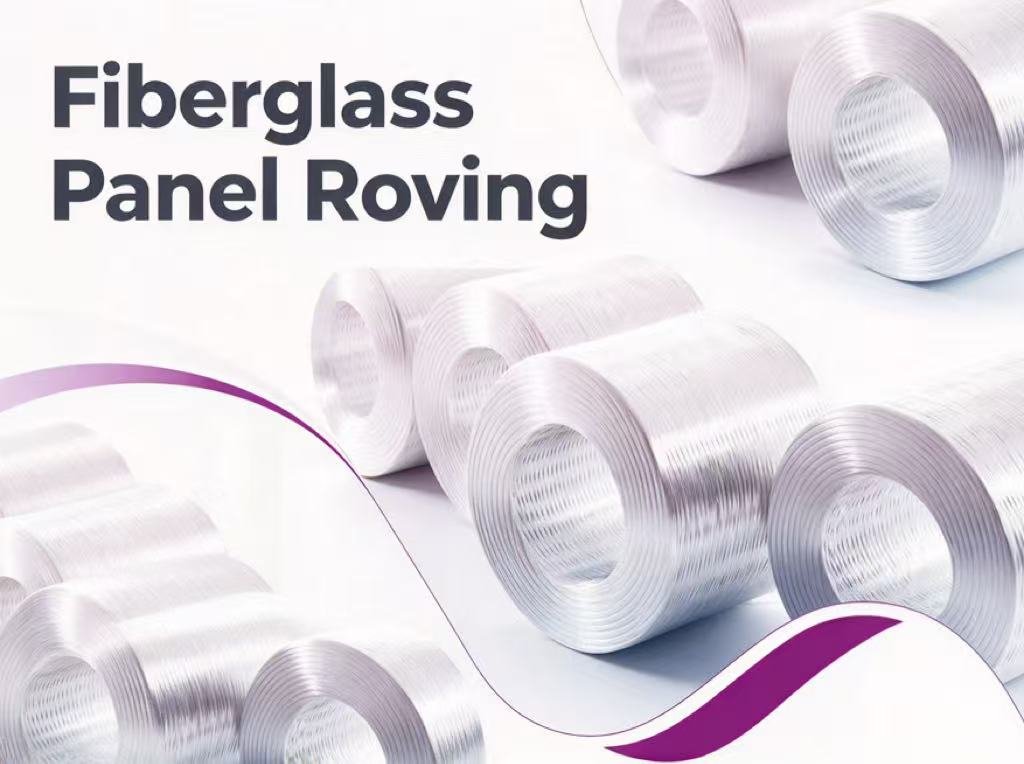
Athermal insulation fiberglass needle mat is not cut from a solid sheet of material. It is produced by opening continuous glass fiber rovings into short filaments, arranging them into a uniform fiber web through a carding machine, then repeatedly punching them with barbed needles to interlock the fibers and form a stable three-dimensional felt structure.
During this process, individual filaments may curl, entangle and form tiny fiber nodes under the impact of needle punches. These are usually enclosed inside the felt body and are called fiber knots or fiber spots. They are traces left by the needle-punching forming process, not impurities mixed in from the outside, and they do not represent poor overall production quality.
In continuous industrial production, as long as the number and size of fiber nodes are within the agreed standard, they will not affect the thermal insulation, sound absorption and mechanical properties of the product. They are inherent characteristics of the needle-punching process, not man-made quality negligence.
Are Tiny Spots in a Fiberglass Needle Mat a Quality Problem?
Evaluate by Index, Not by Visual Intuition
A fiber spot should be assessed, not judged by a glance. A tiny, isolated fiber node inside the thick felt body may only be visible under strong direct light. If it is completely wrapped inside the fiber structure, does not affect the overall density and strength, and falls within the agreed appearance standard, it is acceptable for most industrial insulation and filtration projects.
In contrast, large-area fiber agglomeration, dense cluster of spots, surface open hair balls, or defects located at stress-bearing positions such as edges and splicing parts require closer review. These positions will bear force during construction, installation and long-term use, which may affect the structural stability and service life of the insulation layer.
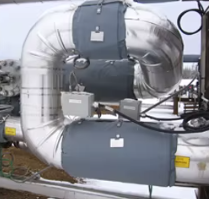
Quality expectations vary by application. A conventional pipeline insulation project may allow a small amount of internal appearance variation that a high-precisionfiltration fiberglass needle feltwould never accept. Projects with strict clean requirements will naturally have higher appearance standards. The effective standard is never “zero defects under any light”, but a clearly agreed specification suitable for the project scenario.
For this reason, buyers should approve real physical samples, define inspection conditions, and agree on acceptable defect types before mass production. Words like “high quality” sound good but are not measurable specifications. A sealed signature sample, product parameter sheet and agreed appearance inspection criteria are much more reliable tools when disputes arise later.
What Causes Appearance Variations During Needle Mat Production?
Fiber Dispersion State During the Carding Process
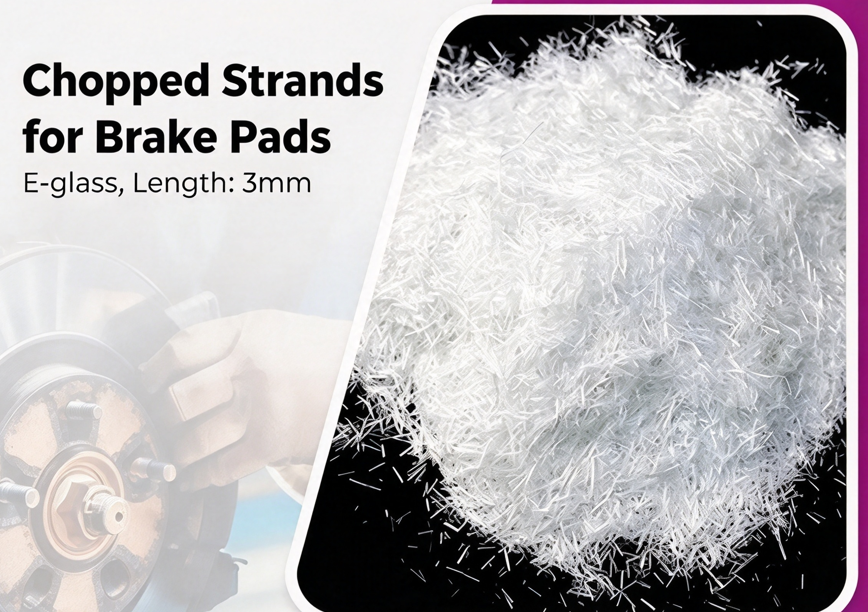
The first cause lies in the fiber web forming stage. To produce a uniform fiberglass needle reinforcement mat, the glass fibers must be fully opened and evenly dispersed during the carding process. If there are subtle differences in fiber length, curl or oiling agent, individual filaments may entangle with each other during carding, forming tiny fiber clusters that enter the subsequent needle-punching process together.
This does not automatically mean the factory ignored quality control. It reflects why needle mat production requires continuous process monitoring and equipment maintenance. Even with fully automatic production lines, real-time adjustment of process parameters is needed to ensure product uniformity.
Raw Material Quality and Fiber Composition
The consistency of raw glass fiber directly affects the stability of the forming effect. Fiber diameter, length distribution, sizing agent type and moisture content will all influence the dispersion and needle-punching forming effect of fibers. This is why experienced manufacturers attach great importance to raw material incoming inspection, instead of treating glass fiber as a common commodity.
For buyers, the takeaway is simple: a needle mat is not “just fiber felt”. Its thermal conductivity, strength, fire resistance and appearance quality are all determined by raw materials and process control long before it is rolled into a finished product.
Needle-Punching Density and Annealing & Setting Conditions
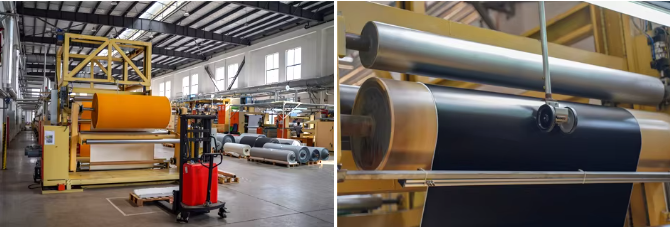
After web forming, the fiber web is compacted into a felt body of specified thickness through multi-needle plate repeated punching. After needle punching, the product also needs to go through a heat setting oven to eliminate internal stress and stabilize the size and structure.
Needle-punching speed, needle density and setting temperature are not trivial finishing steps. Stable process parameters help ensure uniform thickness, consistent density and stable mechanical properties of each roll of product. This is one reason why a complete needle mat factory evaluation should include process discipline, needle tool maintenance, online testing and packaging, not just a few beautiful sample pieces.
How Professional Manufacturers Control Needle Mat Defects
Full-Process Control From Raw Materials to Finished Product Inspection
A responsible supplier will not promise that industrial needle-punched products have zero natural variation at all. The goal of professional quality control is defect prevention, real-time detection, stable production and clear communication.
Quality control starts before needle punching. It includes raw material incoming inspection, carding state monitoring, online thickness and density detection, needle tool maintenance management, heat setting parameter control, and finished product appearance and performance sampling.
The exact inspection scheme depends on product specification, order volume, application scenario and the standard agreed with the buyer.
For a custom flame-retardant fiberglass needle mat project, ask practical questions. Is there an approved production reference sample? Which surfaces are counted as display-facing? What size or density of defect leads to rejection? Can the supplier share inspection records? Is third-party pre-shipment inspection acceptable? Direct and specific questions are far more effective at reducing surprises than a general promise of “best quality”.
How to Choose a Reliable Fiberglass Needle Mat Supplier
Look Beyond the Lowest Unit Price
When comparing suppliers offiberglass needle mat, consider process capability, quality control transparency, delivery stability, customization ability and export service experience. This matters whether you need regional small-batch supply or large-scale bulk orders for large projects.
A supplier experienced in custom needle mat projects should be able to discuss parameters such as thickness tolerance, density deviation, needle-punching strength, sizing compatibility and appearance standards in plain language. Buyers should also confirm packaging methods, pallet protection and transportation schemes. A good needle mat is only valuable if it arrives at the project site in good condition.
Confirm Quality Standards Before Ordering
Before issuing a purchase order, put product specifications, thickness, density, thermal conductivity, fire rating, tensile strength, appearance acceptance criteria and sample sealing rules in writing. Define how fiber spots, delamination, thickness deviation and dimensional defects will be handled.
These steps help all parties involved, from distributors looking for wholesale needle felt to engineering companies purchasing insulation materials for projects. They also support stable cooperation between buyers and suppliers for long-term supply.
In Conclusion
When a buyer asks why fiberglass needle mats have tiny spots while foam insulation looks perfectly uniform, the honest answer is that fiberglass shows part of its manufacturing characteristics. It starts from discrete glass fibers, is formed by needle-punching and interlocking, and occasionally leaves tiny enclosed fiber nodes.
This is by no means an excuse for poor quality. Large-area agglomeration, dense clustered spots, surface exposed hair balls and defects at stress positions all deserve attention and rectification. But isolated internal fiber nodes, when they meet the agreed quality standards and do not affect performance and use, are normal manufacturing characteristics.
The best approach is calm and practical. Agree on real physical samples instead of renderings only. Define what is acceptable for the intended application. Then choose a supplier that can discuss production realities openly and help turn those requirements into stable, reliable product supply.
Whether you are developing a new insulation scheme, purchasingthermal insulation fiberglass needle mat in bulk, or customizing special specification needle felt for filtration projects, sound procurement decisions are based on performance, stability, clear standards and smooth communication — not the presence of one tiny fiber spot.
Do you want to know the technical parameters and TDS of products?
You can leave the specifications and contact information you need~ Our technicians will immediately organize the exclusive information for you and send it to your email!
Interested in this specification?
You can leave your contact information here, and we will send you detailed specifications and application cases to make your purchase clearer~
Contact us via email
You can leave a message about the fiberglass and other composite materials you are interested in/looking for.
We will send you a clear quotation (including product price + shipping cost) within 12 hours.
How can we help you?
You can leave a message about the fiberglass materials you are interested in/looking for.
We will send you a clear quotation (including product price + shipping cost) within 12 hours.