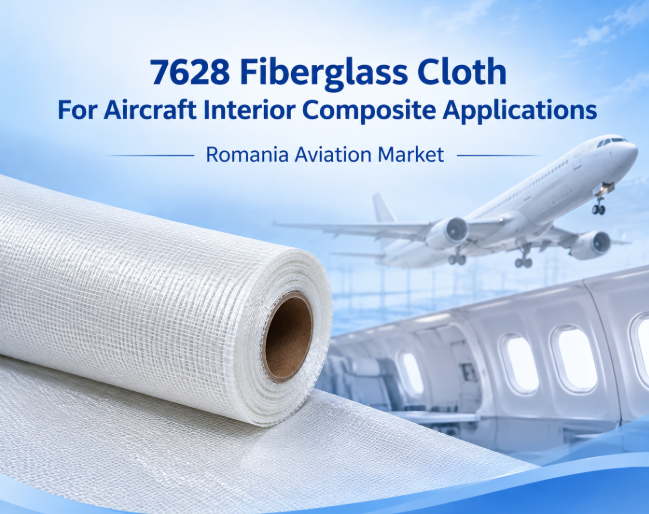
7628 Fiberglass Cloth for Aircraft Interior Composite Panels in Romania
Table of Contents
Add a header to begin generating the table of contents
Introduce
Romania has developed an established aerospace industry covering aircraft component manufacturing, aerostructures, helicopter production and aircraft maintenance. International manufacturers have also expanded their presence in the country, creating opportunities for qualified material suppliers serving aviation-related production. Airbus identifies Romania as an important location for aerostructure manufacturing and helicopter maintenance, while Diehl Aviation has been expanding its aircraft component manufacturing activities in Romania.
Airbus+1
For manufacturers working with composite materials, consistent fabric quality, reliable supply and compatibility with approved resin systems are important considerations. 7628 Fiberglass Cloth can be evaluated as a reinforcement fabric for selected non-primary aircraft interior composite components, provided that the complete material system meets the customer’s engineering and certification requirements.
Where Can 7628 Fiberglass Cloth Be Used?
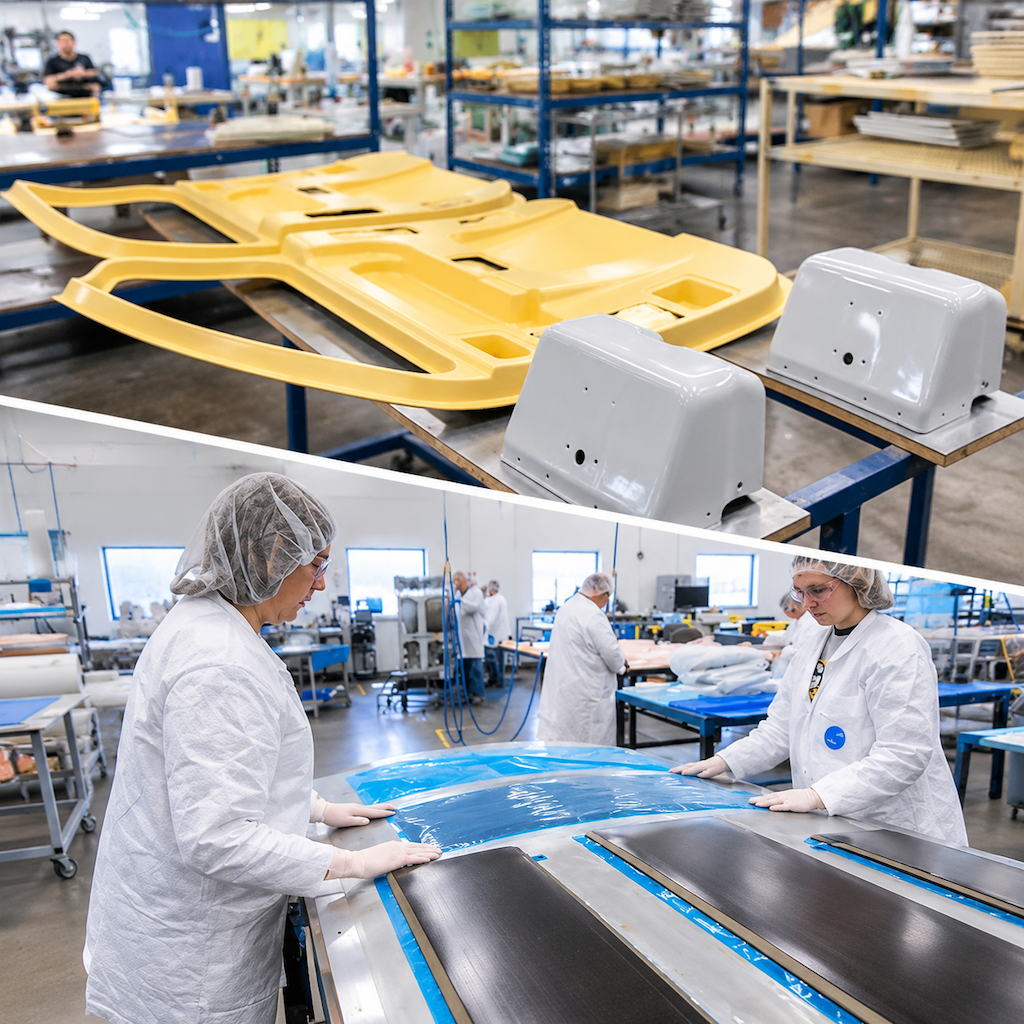
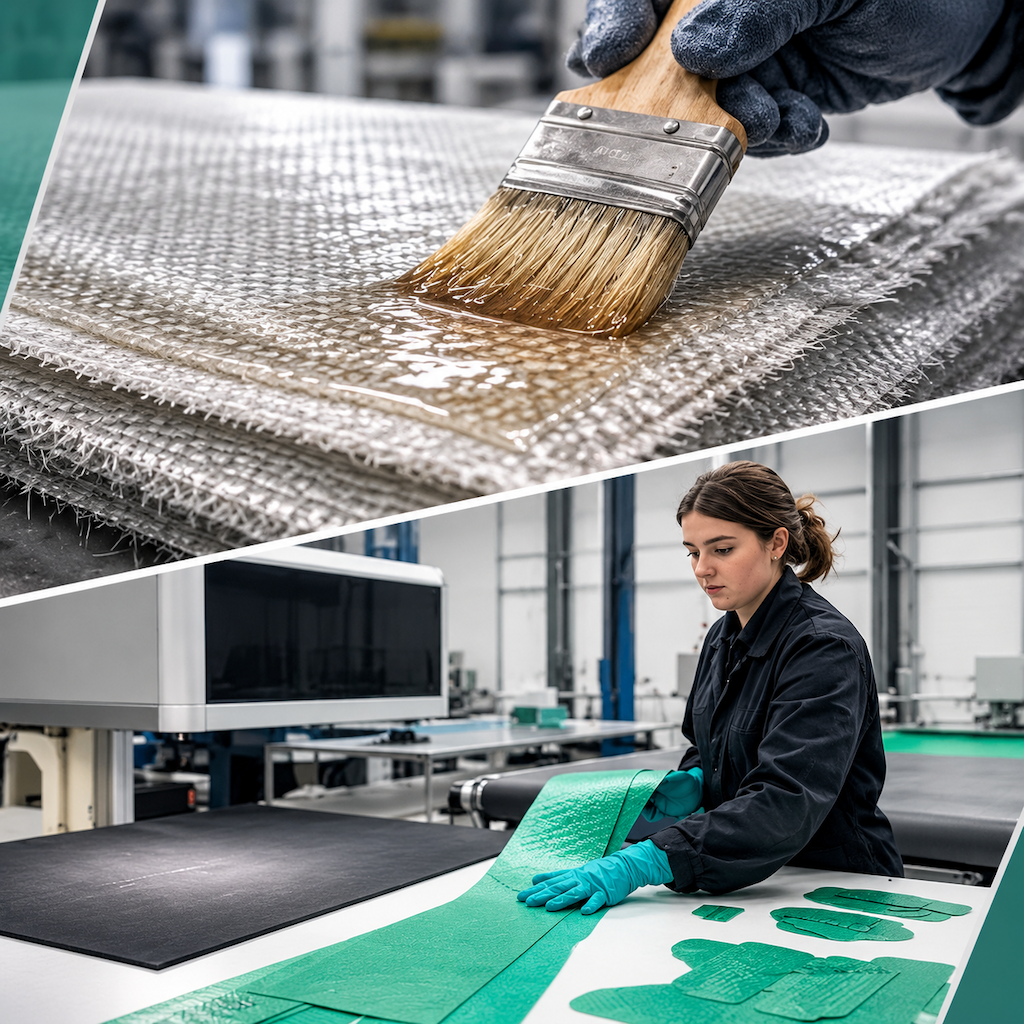
In suitable resin and laminate systems, 7628 Fiberglass Cloth can be considered for selected non-primary composite applications, such as aircraft cabin interior panels, interior partitions, equipment covers and certain composite enclosures. Its woven structure provides a fabric reinforcement layer that can be combined with compatible resin systems to form laminated composite materials.
For aircraft interior projects, the final component must be evaluated as a complete assembly. Resin selection, laminate thickness, surface finish, bonding performance, weight requirements and fire, smoke and toxicity requirements all need to be considered. The suitability of 7628 fabric must be confirmed against the aircraft programme’s approved material specifications before production.
Why Fabric Consistency Matters in Composite Lamination
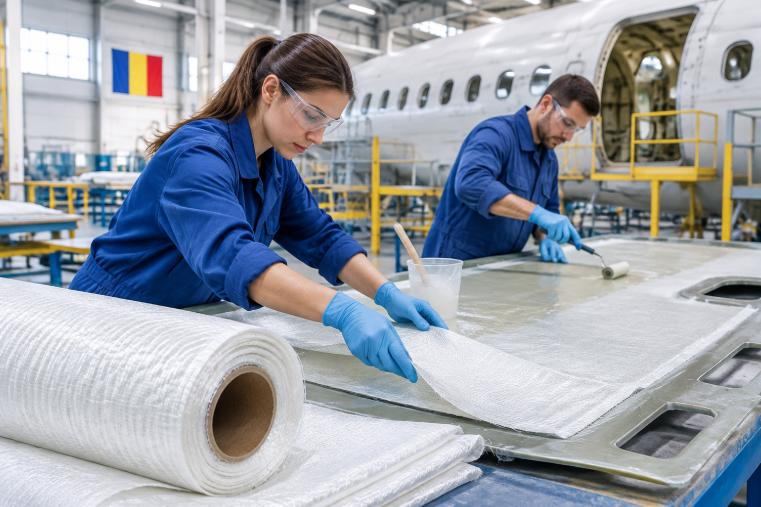
During composite lamination, fabric construction and handling characteristics can influence resin impregnation, fabric positioning and the consistency of the finished laminate. 7628 Fiberglass Cloth provides a woven reinforcement format that can be evaluated for applications requiring controlled fabric placement and repeatable processing.
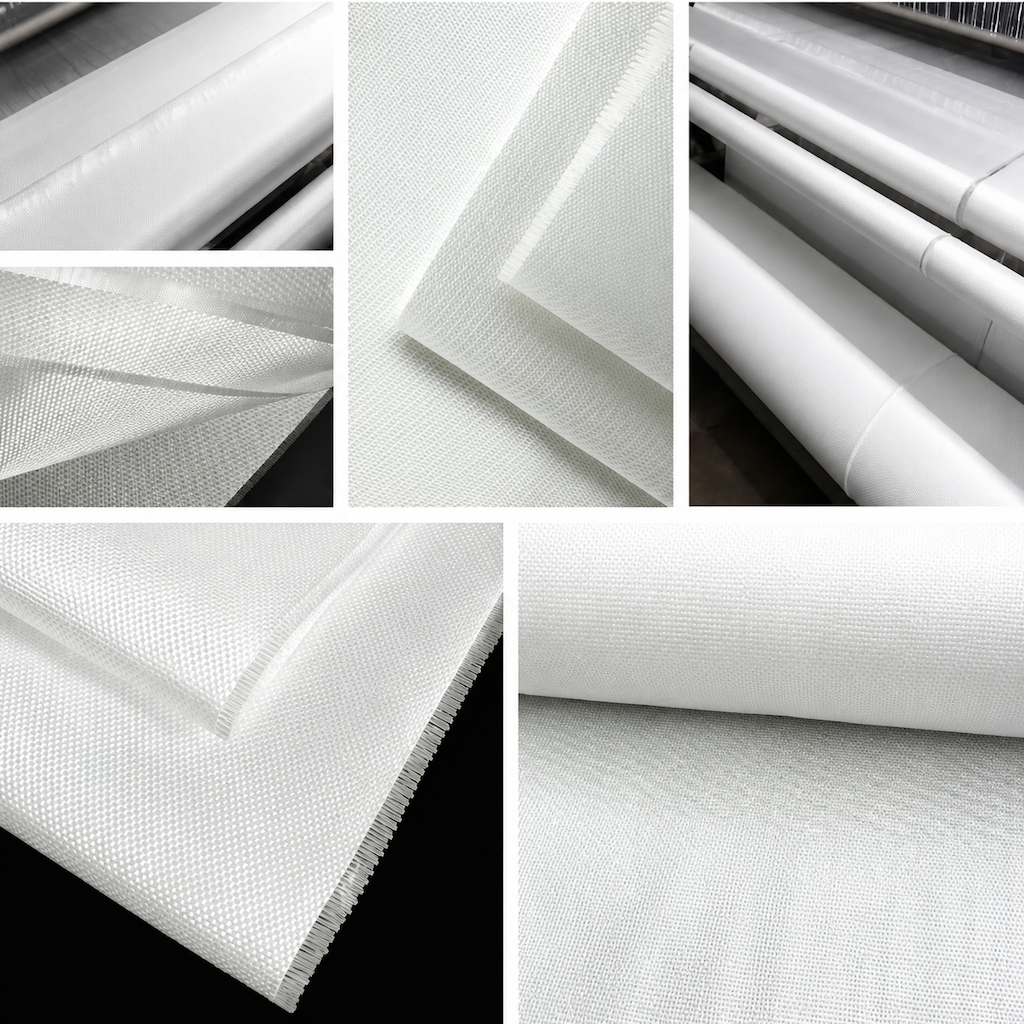
For manufacturers, attention should be paid to fabric width, areal weight, thickness, yarn construction, weave consistency and roll quality. Stable specifications help production teams maintain more consistent material handling and process control. The final laminate performance, however, depends on the complete combination of fabric, resin, curing conditions and manufacturing process.
Material Selection for Romanian Aviation Projects
Selecting 7628 Fiberglass Cloth for an aircraft-related project requires more than choosing a fabric designation. Buyers should confirm the detailed technical data, including areal weight, thickness, yarn type, weave pattern, fabric width and any required surface treatment. These parameters should match the customer’s laminate design and processing method.
It is equally important to confirm the resin compatibility and qualification status of the complete composite system. For aircraft interior applications, customers may require documentation covering material traceability, batch consistency, testing and compliance with applicable aircraft programme requirements. Suppliers should provide accurate technical information and samples for customer evaluation rather than making unsupported claims about aerospace approval.
Reliable Fiberglass Fabric Supply for Composite Manufacturers
For Romanian composite manufacturers and aviation-related suppliers, a dependable7628 Fiberglass Clothsource can support material planning and production evaluation. A professional supplier should be able to communicate technical specifications clearly, maintain batch records and provide samples for preliminary processing tests.
At NIU MATERIAL, we focus on fiberglass fabric supply for industrial composite applications. We can discuss fabric specifications, roll packaging, sample evaluation and customized requirements according to the customer’s project. For aviation-related use, the final selection and approval should always be completed by the customer’s engineering and quality teams.
Do you want to know the technical parameters and TDS of products?
You can leave the specifications and contact information you need~ Our technicians will immediately organize the exclusive information for you and send it to your email!
Interested in this specification?
You can leave your contact information here, and we will send you detailed specifications and application cases to make your purchase clearer~
Contact us via email
You can leave a message about the fiberglass and other composite materials you are interested in/looking for.
We will send you a clear quotation (including product price + shipping cost) within 12 hours.
How can we help you?
You can leave a message about the fiberglass materials you are interested in/looking for.
We will send you a clear quotation (including product price + shipping cost) within 12 hours.