Table of Contents
Add a header to begin generating the table of contents
The Traditional Workhorse: Thermoset-Grade Chopped Strands
What is Thermoset-Grade Sizing?
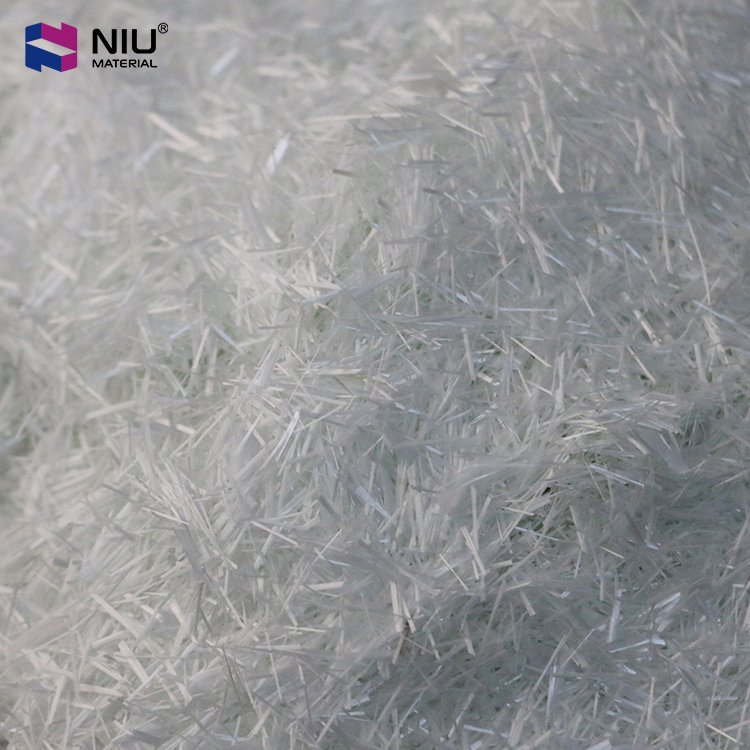
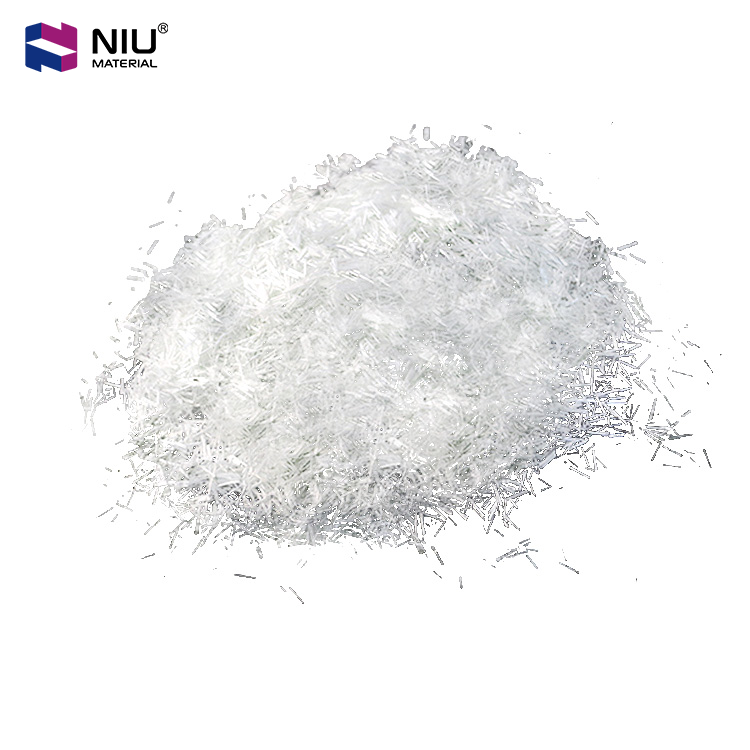
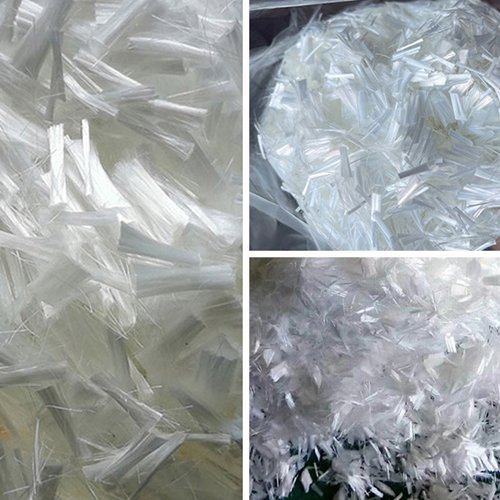
The manufacturing approach for traditional thermoset-grade chopped strands is well-established and highly cost-effective. The sizing is based on silane coupling agents combined with film-forming agents that are chemically optimized for thermoset resin systems — primarily unsaturated polyester, vinyl ester, and epoxy resins.
During production, continuous glass fiber strands are drawn through a sizing bath, where the coating is applied uniformly to every filament. The strands are then dried, cured, and chopped to the desired length. The result is a stiff, well-bundled fiber that disperses readily when it comes into contact with reactive thermoset resins, because the sizing chemistry is designed to dissolve and react with the curing resin system.
Why Thermoset-Grade Became the Industry Standard
There are clear technical and economic reasons why thermoset-grade fiberglass chopped strands have dominated the FRP industry for so long:
Extreme Cost-Effectiveness
For bulk FRP production, thermoset-grade strands are incredibly inexpensive. The raw materials are cheap, and the high-speed production lines can churn out thousands of tons per month with minimal downtime.
Proven Reinforcement Performance
Thermoset sizing has fantastic reactivity with polyester and epoxy systems, creating strong chemical bonds at the fiber-matrix interface. Once the resin cures, the fiber is locked in place, ensuring reliable mechanical performance even when subjected to harsh environmental conditions over long service periods.
Excellent Versatility
Whether you are producing hand-lay-up FRP panels, BMC molded parts, or pultruded profiles, thermoset-grade chopped strands adapt beautifully. They perform consistently across a broad spectrum of standard thermoset processing temperatures without losing their structural integrity.
The Limitations of Thermoset-Grade Strands
Despite its mechanical excellence in thermoset systems, thermoset-grade sizing has a glaring vulnerability: it was never designed for thermoplastic processing.
In its natural state, thermoset sizing is formulated to react with curing thermoset resins. When you throw these same strands into a thermoplastic compounding line — where temperatures can reach 230–320°C and shear forces are extremely high — the sizing chemistry simply isn’t compatible. The result is poor fiber-matrix adhesion, excessive fiber breakage, and “floating fibers” (fiber bloom) on the surface of the finished part.
Furthermore, thermoset-grade strands tend to have stiffer bundle integrity, which can cause feeding problems and inconsistent dispersion in thermoplastic extrusion processes. For manufacturers looking to produce high-quality glass-filled thermoplastic parts, using the wrong chopped strand grade is a costly mistake that shows up in both appearance and mechanical performance.
Direct Comparison: Thermoset vs. Thermoplastic Chopped Strands
To help procurement managers, product engineers, and composite distributors make quick, analytical decisions for their supply chains, let us look at how these two chopped strand grades compare side-by-side.
Core Material and Feature Breakdown
Feature | ||
|---|---|---|
Sizing Type | Silane + thermoset film-former | Silane + thermoplastic film-former & lubricant |
Market Usage | Traditional FRP, BMC, hand | Growing demand in automotive, E&E, consumer goods |
Cost | Lower | Higher |
Production Experience | Very mature | Requires specialized formulation |
Thermoplastic Compatibility | Poor | Excellent |
Surface Finish Quality | Good in thermoset systems | Superior in thermoplastic systems |
Application | FRP panels, pipes, tanks, BMC parts | Automotive parts, E&E components, appliances |
Thermoplastic-Grade Chopped Strands: The High-Performance Alternative
As global demand for lightweight, high-strength engineering plastics reaches new heights, the fiberglass industry has developed alternative sizing chemistries that match the reinforcement performance of thermoset strands — but are specifically engineered for thermoplastic resin systems. The most successful innovation to emerge is thermoplastic-grade chopped strands.
Why Advanced Industries Demand Thermoplastic-Grade Instead?
If you are an export-focused composite manufacturer or a supplier of glass fiber chopped strands, keeping a close eye on industry shifts toward thermoplastics is mandatory.
While standard thermoset-grade chopped strands work perfectly fine for many traditional FRP applications, specific high-growth global markets have shifted decisively toward thermoplastic composites:
The Automotive Industry
Automakers worldwide are aggressively replacing metal parts with glass-filled thermoplastics to reduce vehicle weight and improve fuel efficiency. This requires thermoplastic-grade chopped strands that are specifically formulated for PA6, PA66, and PP systems to meet strict OEM performance specifications.
Electronics & Electrical
The E&E sector demands dimensionally stable, flame-retardant thermoplastic composites for connectors, housings, and circuit board components. Thermoplastic-grade strands with specialized sizing for PBT and PET are the standard for these applications.
The Global Lightweighting Movement
Beyond government mandates, international brands and major retail chains are increasingly requiring lightweight, recyclable composite materials to satisfy sustainability goals and consumer demand. For these demanding global markets, custom-engineered thermoplastic-grade chopped strands are the definitive solution.
Vetting Your Fiberglass Manufacturer
When evaluating a global fiberglass chopped strand manufacturer, your procurement team should ask targeted questions to ensure a smooth partnership:
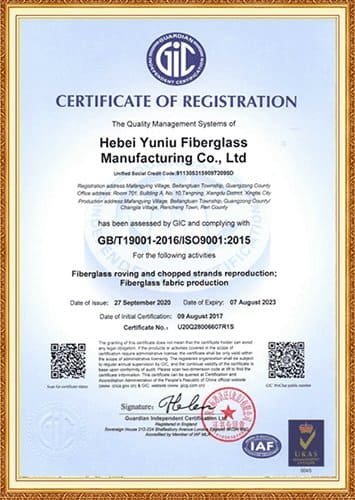
“Can you provide certified ISO, ASTM, or REACH compliance documentation specifically for the sizing chemistry and fiber composition?”
“Do you offer custom sizing formulations to switch out standard thermoset-grade for specialized thermoplastic-grade strands if our product lines change?”
“Are your chopped strands manufactured to standard filament diameter and length tolerances to guarantee consistent performance with our bulk production equipment?”
Our factory boasts comprehensive core advantages in the R&D, production and customization of fiberglass chopped strands, serving global composite manufacturers and distributors with high-quality, cost-effective solutions.
Equipped with fully automated intelligent production lines, we realize precise control over fiber length, filament diameter and sizing coating, effectively solving common industry pain points such as uneven fiber dispersion, excessive fuzz and poor high-temperature resistance.
We have independent R&D laboratories and strict quality inspection systems, capable of customizing thermoset-grade and thermoplastic-grade chopped strands with exclusive sizing formulas according to customers’ resin systems and processing scenarios.
Adhering to flexible production modes, we support low MOQ trial orders and large-scale bulk orders, with stable delivery efficiency to meet different market demands. All our products have passed ISO, REACH and other international certifications, fully complying with global food-grade and industrial safety standards, helping customers reduce procurement risks and market access barriers.
Conclusion
In the competitive world of composite manufacturing, a fiberglass chopped strand is more than just reinforcement — it is the backbone that determines your product’s strength, quality, and market positioning. While the traditional, cost-effective performance of thermoset-grade chopped strands continues to serve as a reliable workhorse for many FRP markets around the world, the clear global trend toward lightweight engineering plastics, automotive electrification, and high-performance consumer goods makes thermoplastic-grade strands an invaluable tool for modern composite brands.
Choose wisely, and let the right chopped strand grade elevate your products to new heights of performance and profitability.