Why Most Industrial Insulation & Reinforcement Layers Fail Early — And How Fiberglass Composite Mat Fixes It
Table of Contents
Add a header to begin generating the table of contents
Introduce
Premature insulation failure, cracked structural layers, and rising maintenance costs are persistent headaches for facility managers, construction contractors and industrial component manufacturers. Many teams invest heavily in top-tier waterproof membranes, metal panels and resin matrices, yet overlook the most critical intermediate layer that determines long-term system stability: the composite reinforcement mat.
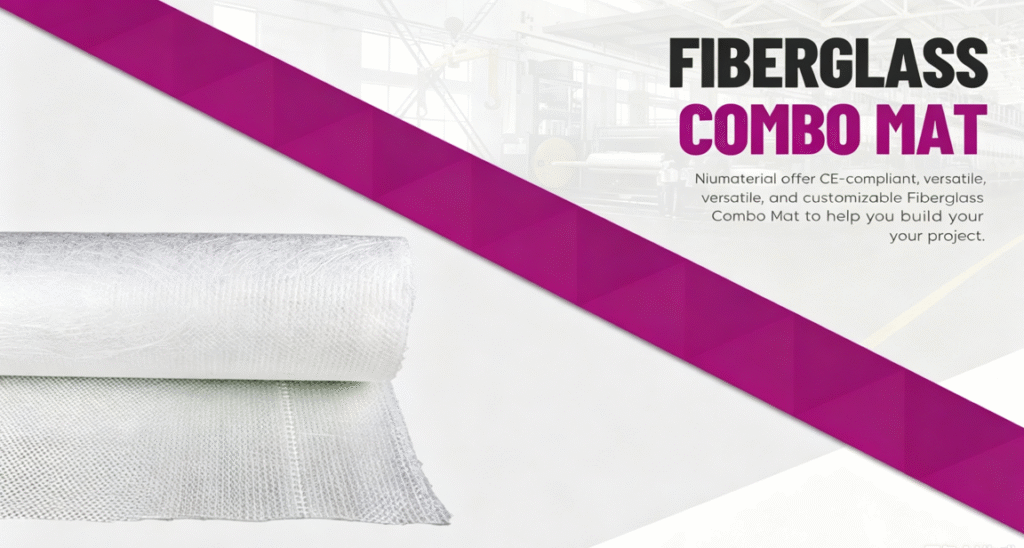
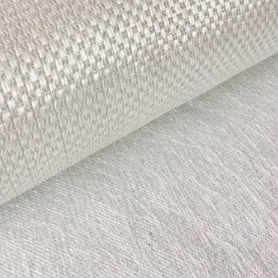
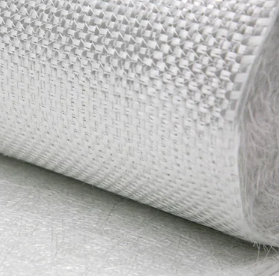
Fiberglass composite mathas emerged as a high-performance multi-functional solution that combines reinforcement, thermal insulation, sound absorption and moisture resistance in a single material. Far more than a basic underlayment, it acts as the structural and functional backbone of industrial insulation systems, exterior wall assemblies, automotive interiors and pipeline protection projects.
This guide breaks down why multi-layer fiberglass composite materials are replacing traditional single-layer insulation products, which grades fit different project needs, and what B2B buyers should verify before placing bulk orders.
The Growing Demand for High-Performance Industrial Reinforcement Materials
The industrial materials market has undergone a major shift in recent years. Project owners and engineering teams are increasingly looking for solutions that deliver multiple functions at once, rather than stacking separate layers of insulation, reinforcement and moisture barrier.
Multi-functional composite materials have benefited greatly from this trend. Instead of accepting high labor costs, thick assembly structures and unstable interlayer bonding, many industrial buyers now seek materials with:
Integrated thermal insulation and structural reinforcement Stable performance under extreme temperature and humidity Lightweight design to reduce structural load Customizable structures for specific working conditions
Insulation fiberglass composite mat fits perfectly into this demand shift. It combines the high strength of glass fiber with the thermal performance of needle-punched felt, and can be laminated with different functional layers to meet targeted project requirements. For industrial facility upgrades, new energy equipment and public infrastructure projects, this all-in-one solution cuts installation time, reduces interlayer failure risks and lowers total lifecycle costs.
What Makes Fiberglass Composite Mat Stand Out From Ordinary Reinforcement Materials?
Traditional insulation solutions usually rely on separate glass wool, rock wool or plain fiberglass mat. These materials perform a single function, and require stacking multiple layers to achieve both reinforcement and insulation effects.
The biggest problem with multi-layer stacking is poor interlayer adhesion. Under long-term temperature changes, vibration and moisture erosion, delamination, hollowing and displacement easily occur between layers, which eventually lead to overall system failure. At the same time, multi-layer construction is slow and labor-intensive, which pushes up total project costs.
Fiberglass Composite Mat: An Integrated Multi-Layer Functional Structure
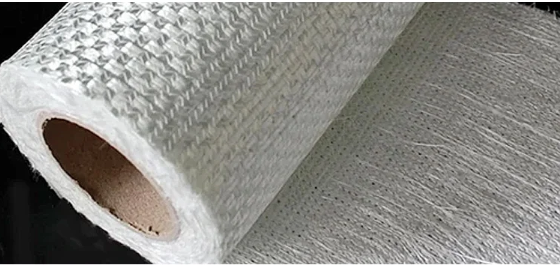
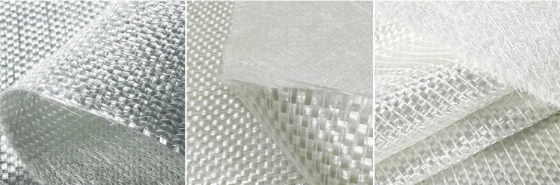
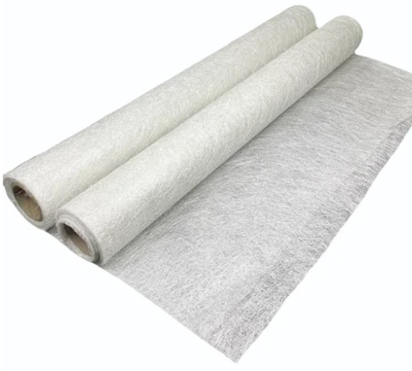
Fiberglass needle punched composite mat is manufactured by laminating needle-punched fiberglass felt, fiberglass mesh, functional film and other layers through a professional compounding process. All layers are tightly combined into one piece, so there is no risk of delamination during long-term use.
Different from ordinary single-layer products, it can give play to the advantages of each layer of material at the same time: the needle-punched felt layer provides thermal insulation and sound absorption, the grid layer improves tensile and tear resistance, and the surface functional layer can achieve moisture-proof, heat reflection, flame retardant and other effects. One layer of composite mat can replace 2–3 layers of traditional materials.
This integrated design is the core reason why it outperforms traditional insulation and reinforcement products in comprehensive performance. For pipeline insulation, exterior wall systems and automotive interiors, it simplifies the construction process while improving system stability.
Why Industrial Operators Choose Fiberglass Composite Mat for Core Projects
Balanced Thermal Insulation and Structural Reinforcement Performance
The biggest advantage of composite mats is that one material solves two core needs at the same time. The dense fiberglass fiber layer provides stable low thermal conductivity, effectively reducing heat loss and energy consumption; the built-in reinforced grid structure significantly improves the tensile strength and tear resistance of the material.
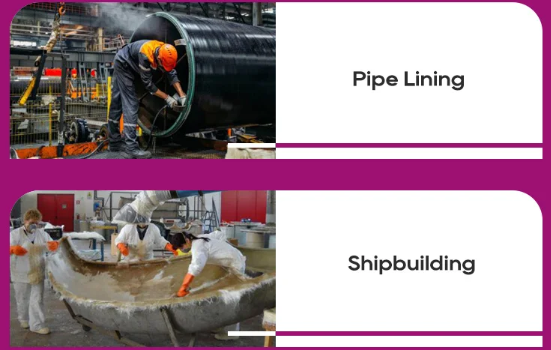
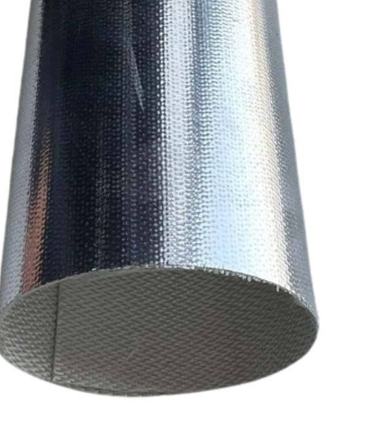
High temperature fiberglass composite mat maintains stable thermal insulation and mechanical properties under long-term high-temperature conditions, and is widely used in boiler insulation, high-temperature pipeline wrapping and industrial furnace auxiliary insulation. It avoids the problem of strength decline of ordinary insulation materials in high-temperature environments.
Excellent Weather Resistance and Extended Service Life
Ordinary insulation materials are easy to absorb moisture, pulverize and age under outdoor or humid working conditions, resulting in a sharp decline in thermal performance within 3–5 years. High-quality fiberglass composite mats have stable chemical properties, and can be matched with waterproof and anti-corrosion surface layers to adapt to harsh working conditions.
Waterproof fiberglass composite mathas a hydrophobic functional layer on the surface, which effectively blocks moisture penetration and prevents the insulation layer from failing due to water absorption. For outdoor projects and underground pipeline projects, this characteristic directly extends the service life of the insulation system by more than one time.
Simplified Construction and Lower Comprehensive Cost
Traditional multi-layer insulation requires separate laying of insulation layer, reinforcement layer and moisture-proof layer, which takes a long construction period and high labor cost. Fiberglass composite mat integrates multiple functions, and can be laid in one step, which greatly shortens the construction period and reduces labor input.
At the same time, the material has good flexibility and drapability, and can be easily cut and pasted on pipes, special-shaped surfaces and curved surfaces, with less material waste during construction. For large-scale projects, the savings in labor and material loss alone can offset the material cost difference.
Rich Functional Options to Meet Diversified Working Conditions
Another major advantage of composite mats is that the surface composite layer can be flexibly configured according to project requirements to achieve targeted functional upgrades.
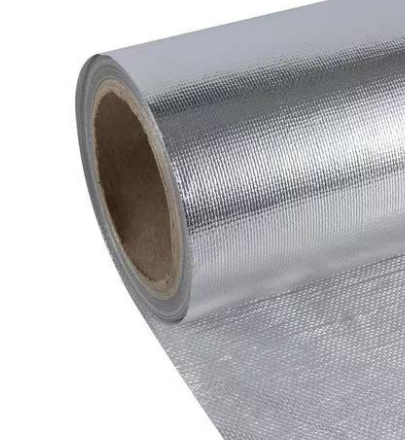
Aluminum foil fiberglass composite mat adds a heat-reflective aluminum foil layer, which can reflect radiant heat and significantly improve thermal insulation effect; fire resistant fiberglass composite mat uses flame-retardant formula and flame-retardant film, which meets strict fire protection standards; sound insulation fiberglass composite mat optimizes the pore structure, which is suitable for building acoustics and equipment noise reduction projects.
This high degree of customization allows fiberglass composite mats to be used in a wide range of industries, from industrial thermal insulation to building energy conservation, from automobile manufacturing to new energy equipment.
Common Grades & Specifications of Fiberglass Composite Mat for Industrial Use
Basic Thermal Insulation Composite Mat
The basic model is mainly based on needle-punched fiberglass felt + fiberglass mesh reinforcement, with balanced thermal insulation and strength performance, and cost-effective.
Common thickness ranges from 10mm to 50mm, and areal weight ranges from 300g/㎡ to 1500g/㎡. It is suitable for conventional building exterior wall insulation, equipment cabinet lining and ordinary pipeline insulation projects, and is the most widely used general-purpose grade.
High Temperature Resistant Composite Mat
High-temperature grade uses high-temperature resistant glass fiber raw materials, matched with high-temperature resistant adhesive and surface layer, and can work stably for a long time in the environment of 300℃–600℃.
It is mainly used in boiler insulation, high-temperature steam pipeline wrapping, industrial furnace peripheral insulation and other scenarios. It maintains dimensional stability under high temperature, does not delaminate or pulverize, and has a much longer service life than ordinary insulation materials.
This grade is compounded with aluminum foil film on the surface of the fiberglass mat, which has the function of heat reflection and moisture barrier.
Aluminum Foil Reflective Composite Mat
It is widely used in roof insulation, exterior wall thermal insulation and HVAC duct insulation. The aluminum foil layer reflects radiant heat, improves the overall thermal insulation effect, and at the same time blocks water vapor, avoiding the decline of insulation performance caused by moisture absorption of the material.
Reinforced Fiberglass Composite Liner
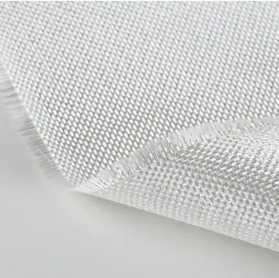
This grade adds a multi-layer fiberglass mesh or woven fabric reinforcement structure, with higher tensile strength and tear resistance, and is suitable for load-bearing and anti-cracking scenes.
Reinforced fiberglass composite lineris often used for waterproof base layer, road bridge reinforcement and composite material mold lining. It can not only play the role of heat insulation and cushioning, but also improve the overall structural strength and prevent cracking and deformation.
Why Partnering With the Right Fiberglass Composite Mat Manufacturer Matters
A composite material supplier should be more than a factory that ships finished mats. The right partner understands fiberglass performance, provides clear technical parameters, explains customization options clearly, and communicates frankly about lead times and tolerances. This support can avoid mismatched composite structures, poor construction adaptability, or packaging damage during transportation.
Look for relevant industry experience, reliable quality assurance system, customization capability and professional export logistics support. You can ask to review standard product parameters first, and then evaluate whether custom composite solutions are needed. Confirm available quality certification documents, and discuss export packaging solutions early, especially when products will pass through multiple climate zones and distribution nodes.
As a professional fiberglass product manufacturer, we provide customized composite mat solutions for industrial insulation, building energy conservation, automobile manufacturing and new energy industries. Whether the project requires standard fiberglass needle punched composite mat, or a custom aluminum foil /flame retardant /reinforced composite solution for a full set of projects, our goal is the same: to deliver materials with reliable performance, stable batch quality and long service life, to help projects reduce comprehensive costs and improve system durability.
In Conclusion
High-quality industrial insulation and reinforcement systems deserve composite materials with as much performance as the core components. Fiberglass composite mat integrates thermal insulation, reinforcement, moisture resistance and flame retardancy, simplifies the construction process, improves system stability, and extends the overall service life.
From basic general-purpose insulation mats to high-temperature resistant, aluminum foil reflective and reinforced special grades, successful material selection always balances functional design and technical practicality. Choose the composite structure that matches the working conditions, verify its adaptability with the construction process, and select a supplier that can deliver stably in batches.
As the demand for high-performance industrial materials continues to grow, multi-functional fiberglass composite materials will remain the core choice for more and more projects. A good composite mat undertakes the functions of heat insulation and reinforcement. A great composite solution helps the entire system operate stably for a longer time and creates more long-term value for the project.
Do you want to know the technical parameters and TDS of products?
You can leave the specifications and contact information you need~ Our technicians will immediately organize the exclusive information for you and send it to your email!
Interested in this specification?
You can leave your contact information here, and we will send you detailed specifications and application cases to make your purchase clearer~
Contact us via email
You can leave a message about the fiberglass and other composite materials you are interested in/looking for.
We will send you a clear quotation (including product price + shipping cost) within 12 hours.
How can we help you?
You can leave a message about the fiberglass materials you are interested in/looking for.
We will send you a clear quotation (including product price + shipping cost) within 12 hours.