
- fiberglassnicole@gmail.com
- +86-13933702587
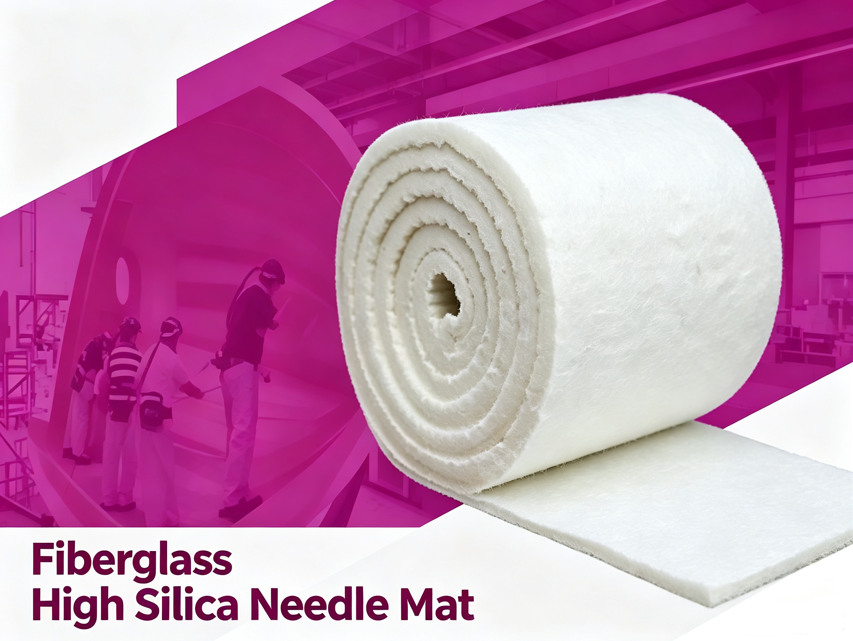
Choosing the right high-temperature insulation material matters far more than many facility managers realize. An insulation mat is not simply a layer of fiber felt tucked inside equipment and pipelines. It controls heat loss, ensures workplace safety, extends equipment service life, and even shapes the long-term operating cost of the entire project.
Today’s industrial market offers dozens of insulation materials to choose from, and no single product works perfectly for every working condition. Still, when combining high-temperature resistance, thermal insulation performance, structural durability and construction flexibility, high silica fiberglass needle mat has become one of the most trusted solutions across high-heat industries.
From industrial furnace linings and high-temperature pipelines to welding fire protection and fire safety components, high silica insulation felts are widely adopted by engineering teams and facility operators pursuing reliable, long-lasting high-heat solutions. For wholesalers, engineering contractors and industrial manufacturers, selecting a trustworthy material supplier is also a critical business decision. Reliable suppliers deliver consistent batch quality, flexible customization options and stable production capacity to match diverse market demands.
So, what is the best high-heat insulation material for industrial projects? The answer depends on the application, but high silica needle felt remains one of the most versatile and high-performance solutions available today.
A high-quality high-temperature insulation material does more than simply block heat. It should maintain stable performance under rated temperature, resist harsh working environments, simplify on-site construction, and bring tangible benefits for both operation teams and project owners.
When sourcing insulation materials, industrial teams usually evaluate several core dimensions: temperature resistance grade, thermal insulation efficiency, structural strength, construction adaptability and safety performance. The ideal material should not only protect equipment and pipelines, but also help reduce long-term operating costs.
Temperature resistance is the top priority for high-heat insulation materials. Since insulation mats stay in high-temperature environments for years, the material must maintain its structure and performance without severe shrinkage, pulverization or strength loss.
High-temperature silica needle felt retains more than 90% of its structural strength under long-term continuous high temperature, with extremely low thermal shrinkage rate. This makes it suitable for long-term stable operation inside high-heat equipment, avoiding frequent replacement caused by material aging.
The core function of insulation materials is to reduce heat loss and lower energy consumption. Materials with low thermal conductivity can effectively block heat transfer, cut down energy waste and improve the operating efficiency of production lines.
High-quality thermal insulation silica fiber felt has a uniform internal fiber structure and rich closed pores, which achieves excellent heat insulation effect with a thinner thickness. For high-energy-consuming equipment such as industrial furnaces and high-temperature pipelines, this performance directly translates into measurable energy cost savings.
Insulation materials with poor toughness are easy to break, delaminate and drop slag during transportation, construction and use, which not only affects the insulation effect, but also brings hidden dangers to on-site safety.
Ablation-resistant fiberglass needle mat is reinforced by needle-punching process, with interlocked fibers and high overall toughness. It is not easy to break during cutting and laying, and will not quickly pulverize under long-term high-temperature and airflow erosion, with a service life 2–3 times that of ordinary insulation materials.
Good insulation materials should adapt to different construction scenarios and equipment shapes. Whether it is a flat furnace wall, a curved pipeline or a special-shaped valve, the material can be closely fitted to avoid gaps that affect heat insulation effect.
High silica needle mats have good flexibility and drapability, and can be cut, wrapped and spliced at will. They can be used not only as integral lining of large equipment, but also as local wrapping insulation of special-shaped parts, lowering the technical threshold of on-site construction.
Insulation materials will be used in personnel-intensive production sites, so they should not release harmful substances or cause occupational health risks.
High-quality high silica insulation felt is made of inorganic glass fiber, does not contain asbestos and harmful binders, does not produce toxic smoke and dust under high temperature, and meets the requirements of environmental protection and occupational health standards.
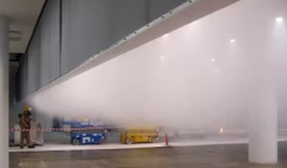
Ceramic fiber has good high temperature resistance and is widely used in medium and high temperature furnace linings. However, it is brittle and easy to produce fiber dust during installation and use, which brings certain occupational health risks.
The trade-off is high temperature resistance and durability. Most glass wool will pulverize and settle quickly when the temperature exceeds 300℃, and rock wool is easy to absorb moisture and corrode, which is not suitable for long-term high-heat and humid environments. For high-end industrial high-temperature projects, such materials can only be used as auxiliary backing layers, and cannot serve as the main high-temperature heat insulation structure.
Aerogel has excellent thermal insulation performance and thin thickness, and is suitable for high-end heat insulation scenes with limited space. However, it is expensive, brittle and easy to break, and has poor adaptability to special-shaped surfaces, which greatly limits its large-scale application.
High silica fiberglass needle mat is a strong all-round choice for industrial high-temperature scenarios that pursue temperature resistance, durability, construction convenience and cost performance. Properly specified high silica felt has excellent flexibility while resisting high temperature erosion, and is suitable for furnace linings, pipeline wrapping, fire protection and other scenes.
Its main trade-off is that compared with ordinary glass wool, the initial unit price is slightly higher. But considering the service life and energy-saving effect, its total cost of ownership is lower in the whole life cycle. For high-temperature projects that pursue long-term reliability, it is a more cost-effective choice.
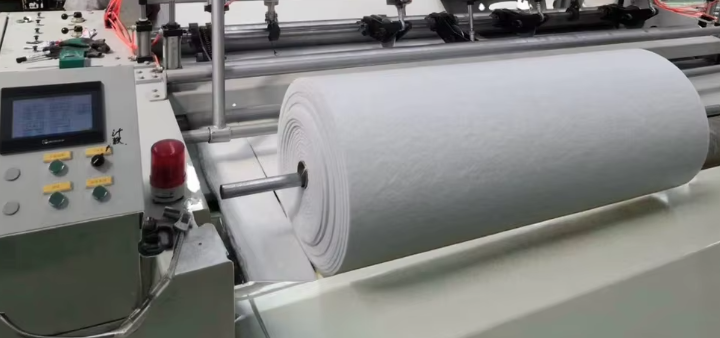
Industrial teams have invested substantial funds in process upgrading and equipment maintenance, and insulating materials should not become a weak link that drags down overall efficiency.
High‑temperature quartz needle felts are made of high‑silica glass fibers with a high softening point. No significant melting or shrinkage occurs even under continuous high temperatures ranging from 800℃ to 1000℃, and their thermal conductivity remains stable over the long term. For high‑temperature equipment such as smelting furnaces and heat‑treatment furnaces, this stable thermal‑insulation performance can directly guarantee uniform temperature inside furnaces and reduce heat‑energy loss.
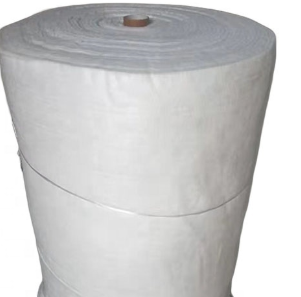
Different from ordinary insulation materials that only have a single heat preservation function, high silica needle felt has both excellent fire resistance and ablation resistance.
Fireproof high silica mat does not burn in case of open fire, and can withstand instantaneous impact of high-temperature sparks and molten metal splashes. It is widely used in welding operation protection, fire door core filling, fire partition and other scenes. One material can simultaneously meet the dual needs of heat insulation and fire safety.
High silica needle felt can be used not only alone, but also in combination with other materials to build a multi-layer insulation structure.
It can be used as hot-face lining directly on the high temperature side, or as secondary insulation behind refractory bricks; it can be wrapped around pipelines and valves, or processed into shaped insulation parts. It is compatible with various construction methods such as pasting, binding and lamination, and can adapt to different project design schemes.
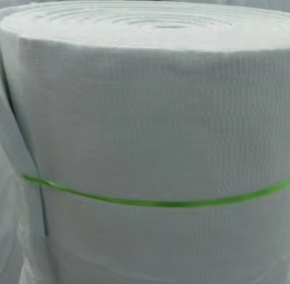
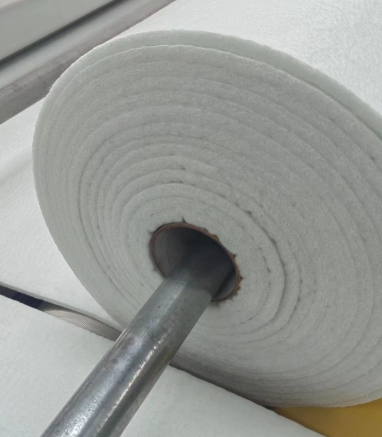
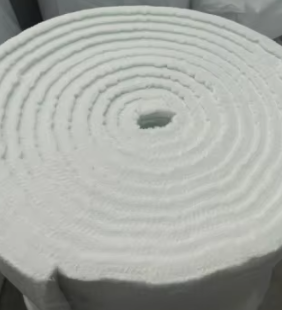
High silica insulation felt is made of inorganic fiber, which is non-toxic and harmless, does not release harmful substances during use, and can be recycled after being discarded.
For projects that need to obtain green building certification and environmental assessment, choosing environmentally friendly high-temperature insulation materials can also add corresponding points. Its long service life also reduces the generation of construction waste, which is in line with the development direction of modern industrial green production.
Start with the actual working conditions: what is the continuous operating temperature, whether there is alternating cold and heat, whether there is corrosive gas or molten metal splash. These questions guide the selection of silica content, temperature resistance grade and surface treatment scheme of the needle mat.
For example, for the backing of medium-temperature industrial furnaces, conventional 800℃ grade products can be selected; for welding fire protection and molten metal splash scenarios, ablation-resistant fiberglass needle mat with higher temperature resistance and stronger impact resistance should be selected. Product compatibility should lead, and price factor can follow.
Common specifications of high silica needle mats cover thickness from 5mm to 50mm and areal weight from 200g/㎡ to 2000g/㎡. Thin products are suitable for narrow spaces and shaped parts wrapping, while thick products are suitable for large equipment lining with high heat insulation requirements.
Thickness and density directly affect thermal insulation effect, material cost and construction difficulty. It is necessary to select the most appropriate specification according to the design thermal insulation index and construction space, instead of blindly pursuing ultra-thick or ultra-light products.
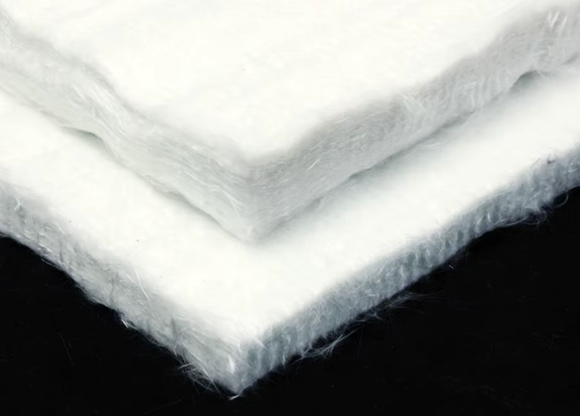
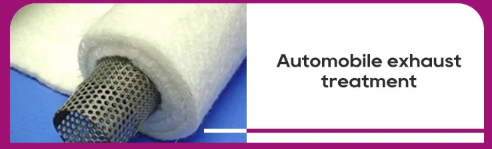
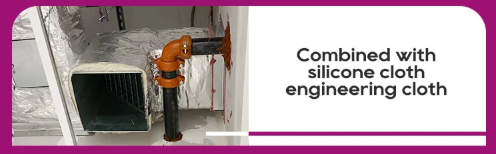
In addition to standard plain felt, high silica needle mats can also be compounded with aluminum foil, glass fiber cloth, stainless steel wire mesh and other materials to achieve targeted performance upgrade.
For example, high-temp pipeline insulation mat often adds an aluminum foil reflective layer on the surface to improve heat insulation effect and moisture resistance; for welding protection scenarios, a wear-resistant cloth surface can be added to improve the service life of repeated use. When selecting models, you can communicate with suppliers about whether there is a matching composite scheme according to your own use needs.
When selecting materials, do not only look at the unit price per square meter, but calculate the total cost comprehensively by combining service life, energy-saving effect and maintenance frequency.
Low-priced inferior products have short service life and high replacement frequency, but the total cost is higher instead. High-quality high silica needle mat has a slightly higher initial investment, but can significantly extend the replacement cycle, reduce energy consumption and lower later maintenance costs, and has a higher return on investment in the long run.
The ideal high-heat insulation material always varies with specific working conditions, project budgets and long-term performance targets. Ceramic fiber works well for ultra-high-temperature linings, and aerogel panels stand out in space-constrained premium applications. Yet for the majority of industrial high-temperature scenarios — from furnace backing linings and high-temp pipeline wrapping to fire protection engineering — high silica fiberglass needle mat remains one of the most well-rounded and cost-effective solutions available.
When sourcing insulation materials, start with real-world operating parameters and performance requirements, then verify product specifications, quality documentation and supplier service capabilities. A properly selected high silica insulation solution does more than protect equipment and pipelines — it delivers lasting value to your project through energy savings and extended service life.

If you have any questions
Please contact us for free consultation and product quotation

You can leave the specifications and contact information you need~ Our technicians will immediately organize the exclusive information for you and send it to your email!
You can leave your contact information here, and we will send you detailed specifications and application cases to make your purchase clearer~