Table of Contents
Add a header to begin generating the table of contents
Introduction
In the complex world of fiber-reinforced composites, every gram per square meter counts. For procurement managers, FRP fabricators, and project engineers in the construction, marine, and automotive industries, understanding the precise weight of a fiberglass chopped strand mat is not merely a technical detail — it’s a critical factor influencing everything from material costs to project timelines. Imagine a procurement manager meticulously calculating resin consumption for a large-scale FRP panel project, or a logistics coordinator optimizing container loading for a bulk export order — in both scenarios, the areal weight of each chopped strand mat (CSM) roll directly impacts efficiency and profitability. This guide delves into the nuances of fiberglass mat weight, exploring not just the standard areal weight specifications but also how they shape resin uptake, laminate thickness, container capacity, and ultimately, the per-unit material cost for fiberglass chopped strand mat suppliers, FRP manufacturers, and all composite material distributors.
Average Weight of Fiberglass Chopped Strand Mat
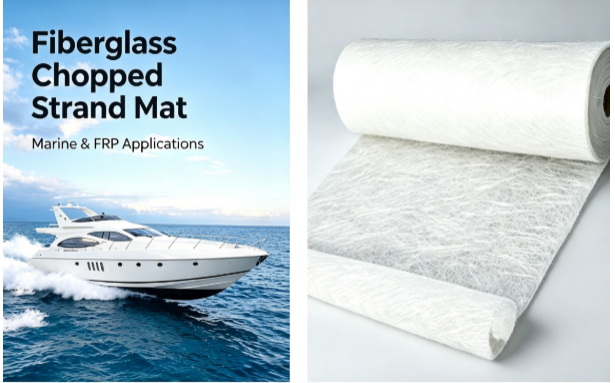
When considering a standard E-glass fiberglass chopped strand mat, the areal weight typically ranges from 100 g/m² to over 1,200 g/m². This significant variation is influenced by fiber length, binder type, and application requirements. To provide a clearer picture for B2B buyers, we can categorize these mats into lightweight, standard, and heavyweight options.
Mat Category | Approximate Areal Weight | Typical Application |
|---|---|---|
Lightweight CSM | 100 g/m² – 300 g/m² | Surface veils, decorative panels, lightweight FRP |
Standard CSM | 300 g/m² – 600 g/m² | Hand lay-up, boat hulls, sanitary ware, cooling towers |
Heavyweight CSM | 600 g/m² – 1,200 g/m²+ | Structural FRP, storage tanks, corrosion-resistant pipes |
These numbers are averages drawn from common industry specifications, not a fixed rule. Every fiberglass chopped strand mat manufacturer sets their own weight tolerances depending on fiber formulation and binder content, so always ask your supplier for the exact spec sheet before finalizing an order.
Areal Weight vs. Roll Weight
Buyers sometimes confuse areal weight (g/m²) with the total weight of a roll they’ll actually be shipping. These are two very different numbers, and mixing them up leads to bad freight estimates.
A simple way to think about it:
Roll Weight = Areal Weight (g/m²) × Roll Width (m) × Roll Length (m) ÷ 1,000
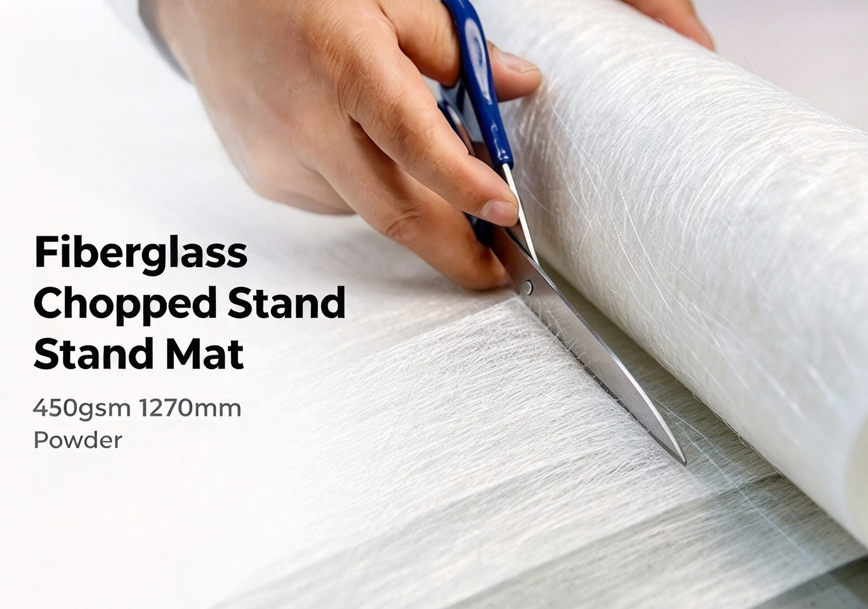
So if you’re working with a standard 450 g/m² chopped strand mat in a 1.27m width and 50m length, you’re looking at a roll weight of approximately 28.6 kg. Multiply that by the number of rolls per pallet and per container, and you start to see how quickly the numbers add up across a full shipment.
Why CSM Weight Varies So Much
If weight were just about covering a square meter with glass fibers, every mat would weigh roughly the same. But it isn’t, and here’s why.
Fiber Length and Distribution
The most fundamental factor is fiber length. Chopped strand mat is made by cutting continuous glass fiber strands into short lengths — typically 50mm, but ranging from 30mm to 70mm — and laying them randomly in a web. Shorter fibers produce a more uniform, thinner mat with lower areal weight, while longer fibers create a bulkier mat with higher tensile strength and greater weight per square meter.
This isn’t just a cosmetic difference either. Fiber length also affects how the mat handles during fabrication — longer fibers provide better drape and conformability for complex shapes, while shorter fibers offer more consistent thickness control for flat panel production.
Binder Type and Content
Binder plays a bigger role in weight than most buyers expect. Fiberglass chopped strand mat uses either powder binder or emulsion binder to hold the fibers together, and the binder content typically ranges from 2% to 8% of the total mat weight.
Powder-bonded mats tend to be stiffer and have better dimensional stability, making them ideal for automated production lines. Emulsion-bonded mats are softer and more drapable, conforming easily to complex mold surfaces — a quality highly valued in hand lay-up and boat building. The type and amount of binder not only affect the final weight but also the mat’s compatibility with different resin systems (polyester, vinyl ester, epoxy).
Glass Type and Grade — Why Premium Grades Weigh Differently
For many high-performance and specialty applications, the type of glass fiber is a strategic choice that directly impacts mat weight and performance. E-glass (electrical-grade) is the industry standard, offering a good balance of strength and cost. C-glass (chemical-grade) provides better corrosion resistance and is often used in chemical storage and acid-resistant applications.
High-modulus and S-glass variants offer significantly higher tensile strength but come at a higher cost and may have slightly different density characteristics. For premium FRP products — such as aerospace components, high-performance boat hulls, or wind turbine blades — the choice of glass grade directly correlates with both the mat’s areal weight and its mechanical performance.
Why Mat Weight Matters for B2B Buyers — Cost & Logistics
For bulk fiberglass chopped strand mat and wholesale fiberglass mat buyers, the areal weight of each roll has profound implications for operational costs and logistical efficiency.
Mat Weight's Effect on Resin Consumption and Laminate Cost
The areal weight of a chopped strand mat directly impacts how much resin it will absorb during lamination — a factor that often matters more than the cost of the mat itself. As a general rule, CSM typically absorbs resin at a ratio of approximately 1:1.5 to 1:2.5 (mat weight : resin weight). This means a 450 g/m² mat will take up roughly 675 to 1,125 g of resin per square meter, depending on fabrication technique and resin viscosity.
For large-scale projects — say, a 10,000 m² FRP panel contract — choosing between a 300 g/m² and a 450 g/m² mat doesn’t just change the mat cost; it changes the entire resin budget. Heavier mats mean more resin uptake, thicker laminates, and higher total material cost per square meter. For cost-sensitive projects, selecting the right areal weight is one of the most impactful procurement decisions you can make.
Mat Weight's Effect on Pallet and Container Loading
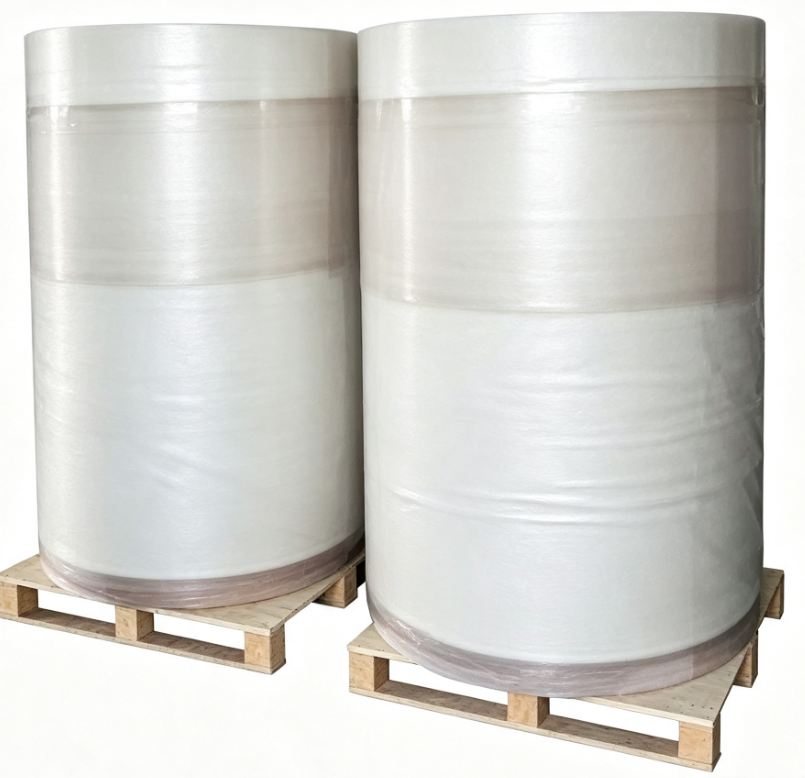
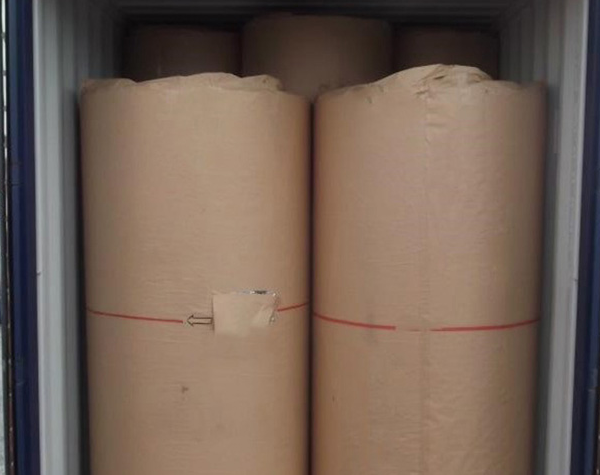
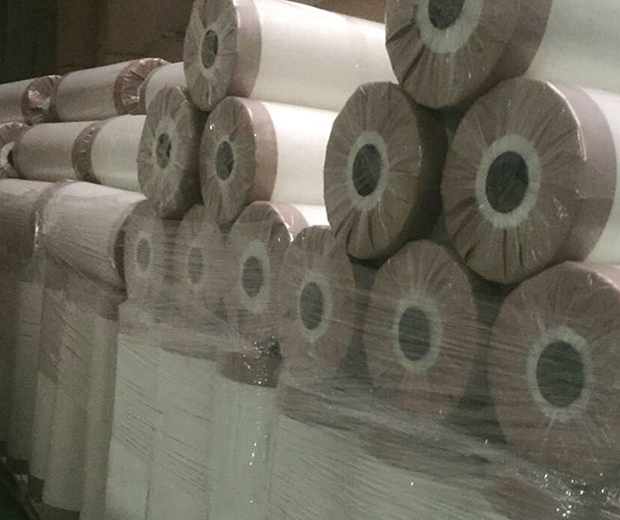
Container loading is a delicate balance between volume and weight limits. A standard 20ft shipping container typically has a maximum gross weight of around 24,000 kg (52,910 lbs), with a payload capacity of approximately 21,700 kg (47,840 lbs). For fiberglass chopped strand mat suppliers and distributors, it’s crucial to determine whether the container will weigh out (reach its maximum weight limit) before it cubes out (reaches its maximum volume capacity).
Heavier mats are more likely to cause a container to weigh out sooner, meaning fewer square meters can be shipped per container, increasing the per-square-meter shipping cost. For instance, a container loaded with 300 g/m² lightweight CSM might carry significantly more total square meterage than the same container loaded with 900 g/m² heavyweight mat, even though both fill the container to the same volume. This difference can dramatically affect landed cost per square meter for export orders.
Conclusion
So, how much does a fiberglass chopped strand mat weigh? The honest answer is: it depends, and that “it depends” is exactly the part worth understanding before you place a bulk order.
Areal weight ranges from roughly 100 g/m² for lightweight veils to well over 1,200 g/m² for heavyweight structural mats, and that difference ripples through resin consumption, laminate thickness, container loading, and final freight cost. For anyone buying chopped strand mat wholesale, treating areal weight as a serious spec — not an afterthought — can meaningfully change your landed cost per square meter.
Whether you’re leaning toward lightweight fiberglass mat for a cost-sensitive, high-volume program, or heavyweight CSM for a structural or corrosion-resistant FRP line, the smartest move is working closely with your supplier from the earliest planning stages. Getting areal weight, binder type, roll dimensions, and freight strategy aligned early tends to save far more than trying to adjust it after production has already started.