Add a header to begin generating the table of contents
Why Is Fiberglass Mesh Important for Wall Reinforcement?
Wall surfaces may develop cracks due to temperature changes, substrate movement, shrinkage and differences between construction materials. Without suitable reinforcement, these stresses may lead to cracking in plaster or render layers.
Fiberglass Mesh is embedded into the appropriate base coat or plaster layer to distribute stress across a wider area. It helps reduce the risk of localized cracking when correctly installed as part of a compatible wall reinforcement system.
Where Is Fiberglass Mesh Commonly Used?
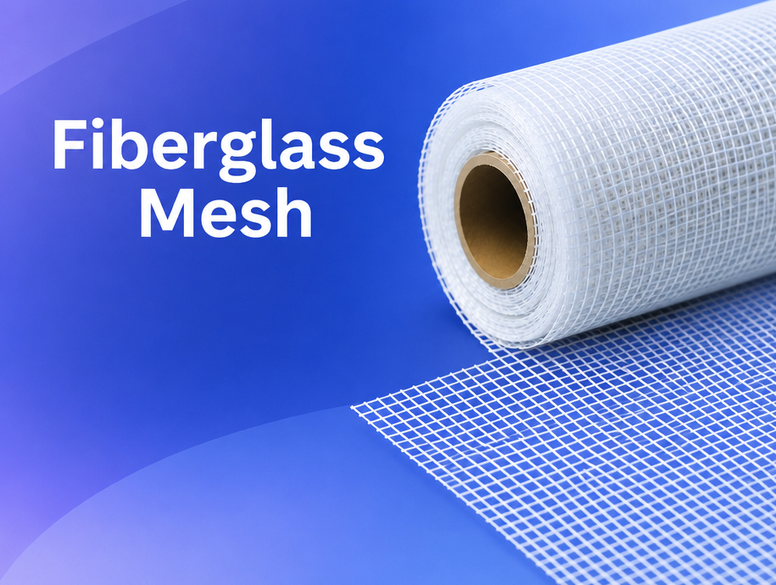
Fiberglass Mesh is widely used in construction reinforcement systems. Its actual application depends on mesh weight, opening size, coating quality and alkali resistance.
Common applications include:
External Wall Insulation Systems (EIFS): Embedded in the base coat to reinforce insulation system surfaces.
Plaster and Render Reinforcement: Helps reduce cracking in suitable cement-based plaster layers.
Wall Crack Repair: Used as reinforcement when repairing cracks and reinforcing wall surfaces.
Cement-Based Board Reinforcement: Selected mesh products can be incorporated into compatible cementitious board systems.
Mosaic and Tile Backing: Certain mesh specifications are used as backing or reinforcement materials for mosaic products.
How Does Fiberglass Mesh Help Prevent Wall Cracks?
The performance of Fiberglass Mesh comes from its continuous reinforcement structure. When embedded in the correct position within a compatible mortar layer, the mesh helps distribute tensile stresses and limit the development of localized cracks.
For effective installation, the mesh should be fully embedded in the base coat, with suitable overlaps between adjacent sheets. It should not simply be placed loosely against the wall or left exposed on the surface. Correct installation and compatible mortar are essential to the performance of the complete reinforcement system.
What Specifications Should You Consider When Buying Fiberglass Mesh?
Choosing the rightFiberglass Mesh requires more than checking the roll size. Different construction systems may require different mesh weights, opening sizes and coating properties.
Important specifications include:
Weight (GSM): Common options include 60gsm, 75gsm, 100gsm, 145gsm and 160gsm.
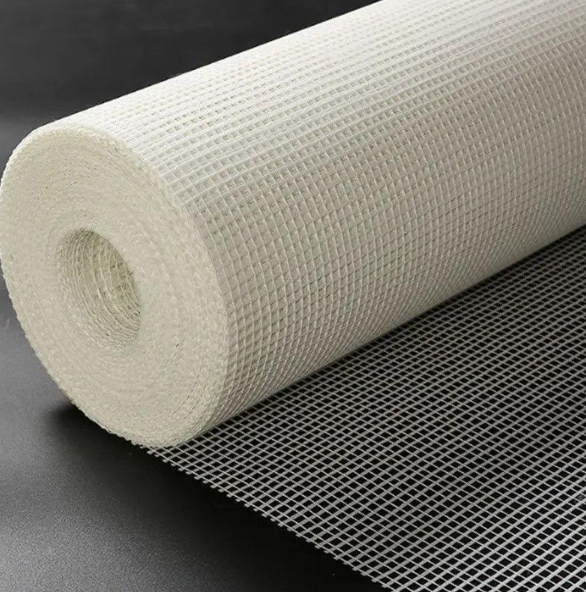
Mesh Size: Common openings include 4×4mm, 5×5mm and 4×5mm.
Roll Width and Length: Selected according to installation requirements and project dimensions.
Coating: Alkali-resistant coating is important for mesh embedded in cement-based systems.
Tensile Strength: Should meet the technical requirements of the intended reinforcement system.
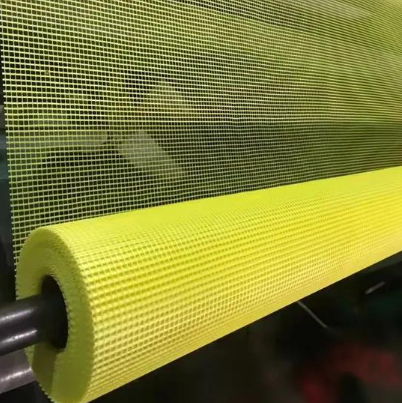
Color: Common options include white, blue, yellow and other customized colors, depending on product availability.
The correct specification should be selected according to the construction system, local standards and project requirements.
Why Choose NIU MATERIAL for Fiberglass Mesh?
A dependableFiberglass Mesh supplier should provide consistent product quality and understand the requirements of different construction markets.
NIU MATERIAL focuses on:
Multiple Specifications: Different GSM, mesh sizes, roll dimensions and colors.
Coating Quality Control: Attention to coating uniformity and product appearance.
Production Inspection: Checks on weight, mesh opening, roll dimensions and packaging.
Customization Support: Product specifications can be discussed according to project requirements and production capabilities.
Export Service: Support for packaging, order coordination and international delivery.
Whether you are a distributor, building-material importer or construction-material manufacturer, NIU MATERIAL can help you select suitableFiberglass Mesh for your market.
Do you want to know the technical parameters and TDS of products?
You can leave the specifications and contact information you need~ Our technicians will immediately organize the exclusive information for you and send it to your email!
Interested in this specification?
You can leave your contact information here, and we will send you detailed specifications and application cases to make your purchase clearer~
Contact us via email
You can leave a message about the fiberglass and other composite materials you are interested in/looking for.
We will send you a clear quotation (including product price + shipping cost) within 12 hours.
How can we help you?
You can leave a message about the fiberglass materials you are interested in/looking for.
We will send you a clear quotation (including product price + shipping cost) within 12 hours.