Add a header to begin generating the table of contents
Introduce
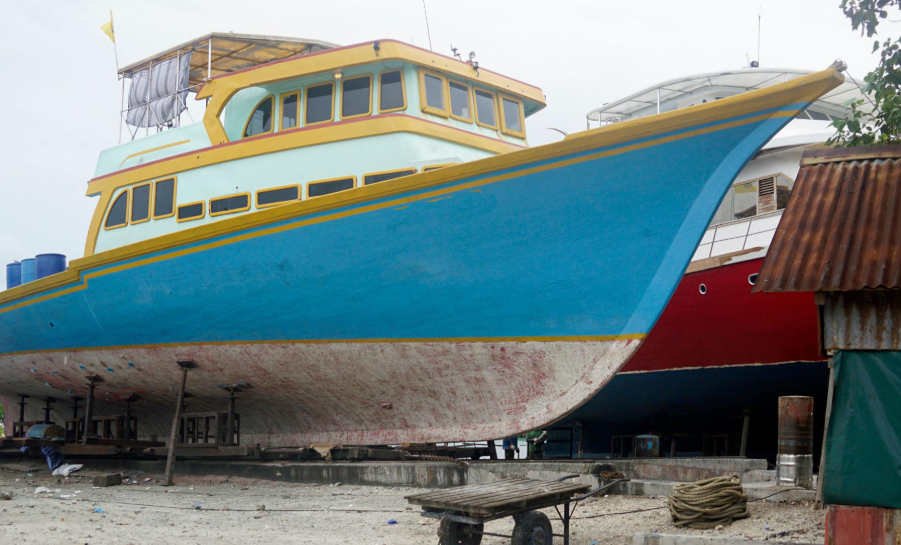
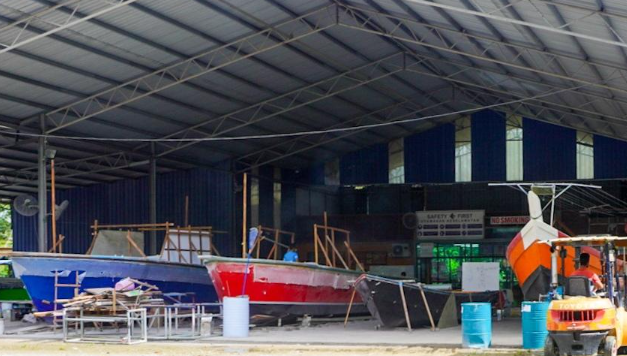
The Maldives is an island nation where boats and marine transportation play an important role in everyday life and economic activities. The marine environment exposes vessels to seawater, humidity, sunlight and changing weather conditions. For boatbuilders and marine composite manufacturers, selecting suitable reinforcement materials is an important part of producing reliable fiberglass components.
What Challenges Should Boatbuilders Consider?
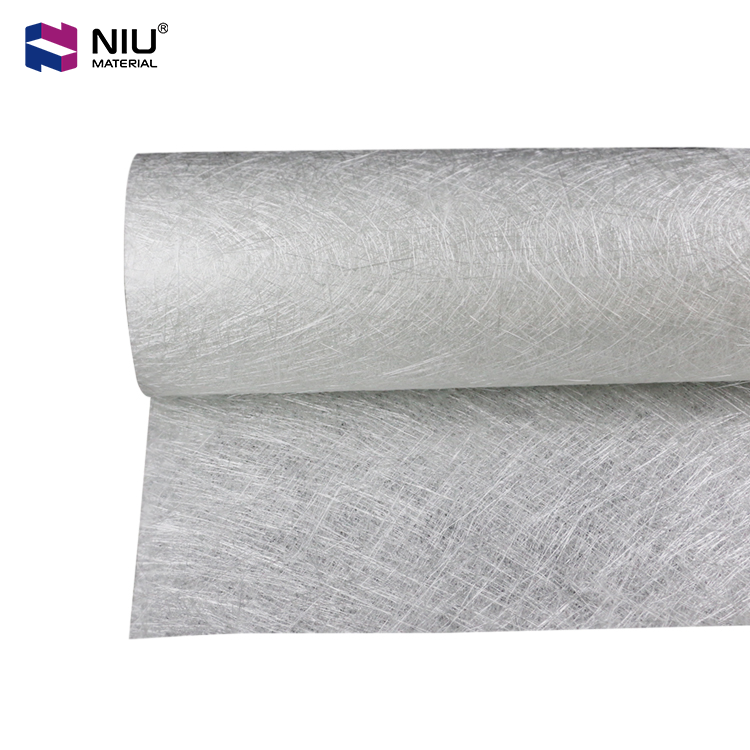
When choosingfiberglass chopped strand matfor marine applications, manufacturers need to consider more than the product price. Weight, roll width, resin compatibility and laminate design all influence material selection.
For this order, we focused on three important considerations:
Challenge 1: Selecting the Right Reinforcement Weight
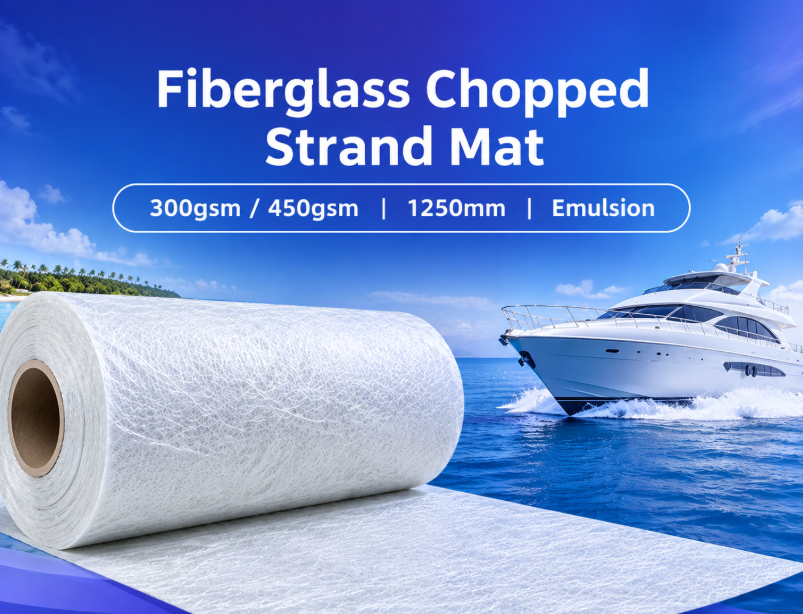
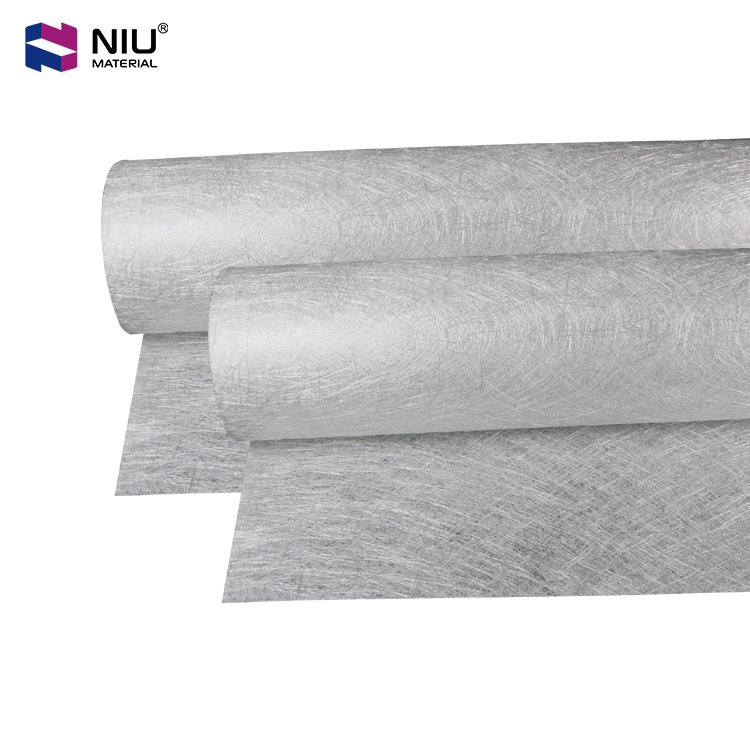
Different boat components may require different laminate structures. A single mat weight may not be suitable for every layer or component. The customer selected both 300gsm fiberglass chopped strand mat and 450gsm fiberglass chopped strand mat, providing two material weights for different reinforcement requirements.
The 300gsm option can be considered where a lighter mat layer is required, while 450gsm can be considered where a higher glass-fiber areal weight per layer is needed. The actual laminate thickness and strength depend on the number of layers, resin content, fiber orientation and manufacturing process.
Challenge 2: Matching the Roll Width to Production Requirements
Material width affects cutting, material layout and production efficiency. A suitable roll width helps manufacturers plan how the mat will be placed into molds and how much trimming may be required.
For this order, we supplied 1250mm fiberglass chopped strand mat in both 300gsm and 450gsm weights. The consistent width makes it easier for the buyer to plan material handling and cutting arrangements across the two specifications.
Challenge 3: Choosing an Emulsion Binder for the Resin Process
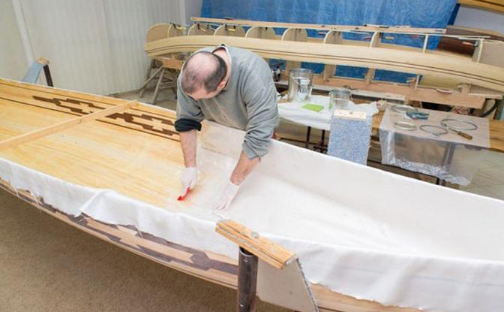
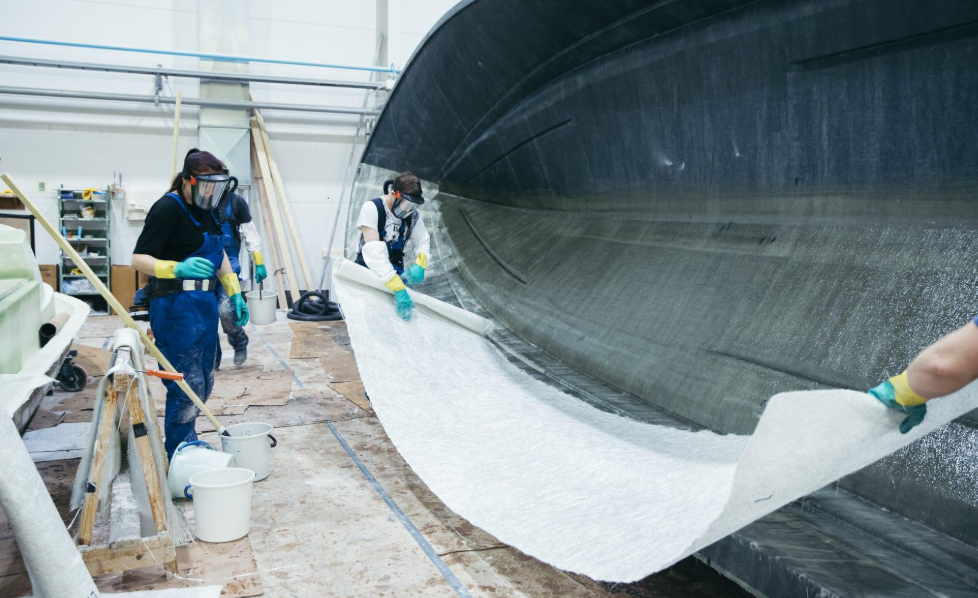
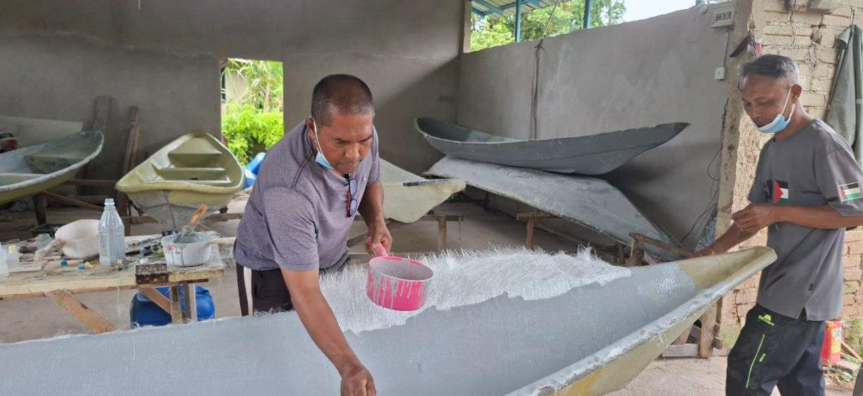
The binder system is an important consideration when selectingfiberglass chopped strand mat. Emulsion-bonded mat is commonly used with compatible polyester resin systems in FRP hand lay-up and other suitable molding processes.
For boatbuilding, resin wet-out and air release are important to laminate quality. The actual performance depends on the resin formulation, binder compatibility, temperature and working conditions. We recommend confirming compatibility with the customer’s specific resin system before production.
One Product, Two Weights: A More Flexible Laminate Plan
Instead of relying on only one weight, the customer selected two specifications of fiberglass chopped strand mat to support different material requirements.
300gsm: A lighter reinforcement layer option for suitable laminate designs.
450gsm: A higher areal-weight option for laminate structures requiring more glass fiber per layer.
1250mm width: A consistent roll width for cutting and material layout.
Emulsion binder: A binder option for compatible resin-based composite processes.
This order provides the buyer with two weight choices under the same product category and width, making material planning more flexible for different boat components.
Ready to Reinforce Your Next Marine Project?
Our recent Maldives order demonstrates how two carefully selected weights of fiberglass chopped strand mat can support different reinforcement requirements within one marine product category.
With 300gsm and 450gsm options, a 1250mm width and an emulsion binder, YUNIU supplied materials according to the customer’s stated boatbuilding requirements.
Looking forfiberglass chopped strand mat for boat hulls, decks or other FRP marine components? Contact YUNIU with your required weight, width, binder type and resin system. We are ready to help you evaluate the right material for your next project.
Do you want to know the technical parameters and TDS of products?
You can leave the specifications and contact information you need~ Our technicians will immediately organize the exclusive information for you and send it to your email!
Interested in this specification?
You can leave your contact information here, and we will send you detailed specifications and application cases to make your purchase clearer~
Contact us via email
You can leave a message about the fiberglass and other composite materials you are interested in/looking for.
We will send you a clear quotation (including product price + shipping cost) within 12 hours.
How can we help you?
You can leave a message about the fiberglass materials you are interested in/looking for.
We will send you a clear quotation (including product price + shipping cost) within 12 hours.